Conversational AI for Automotive
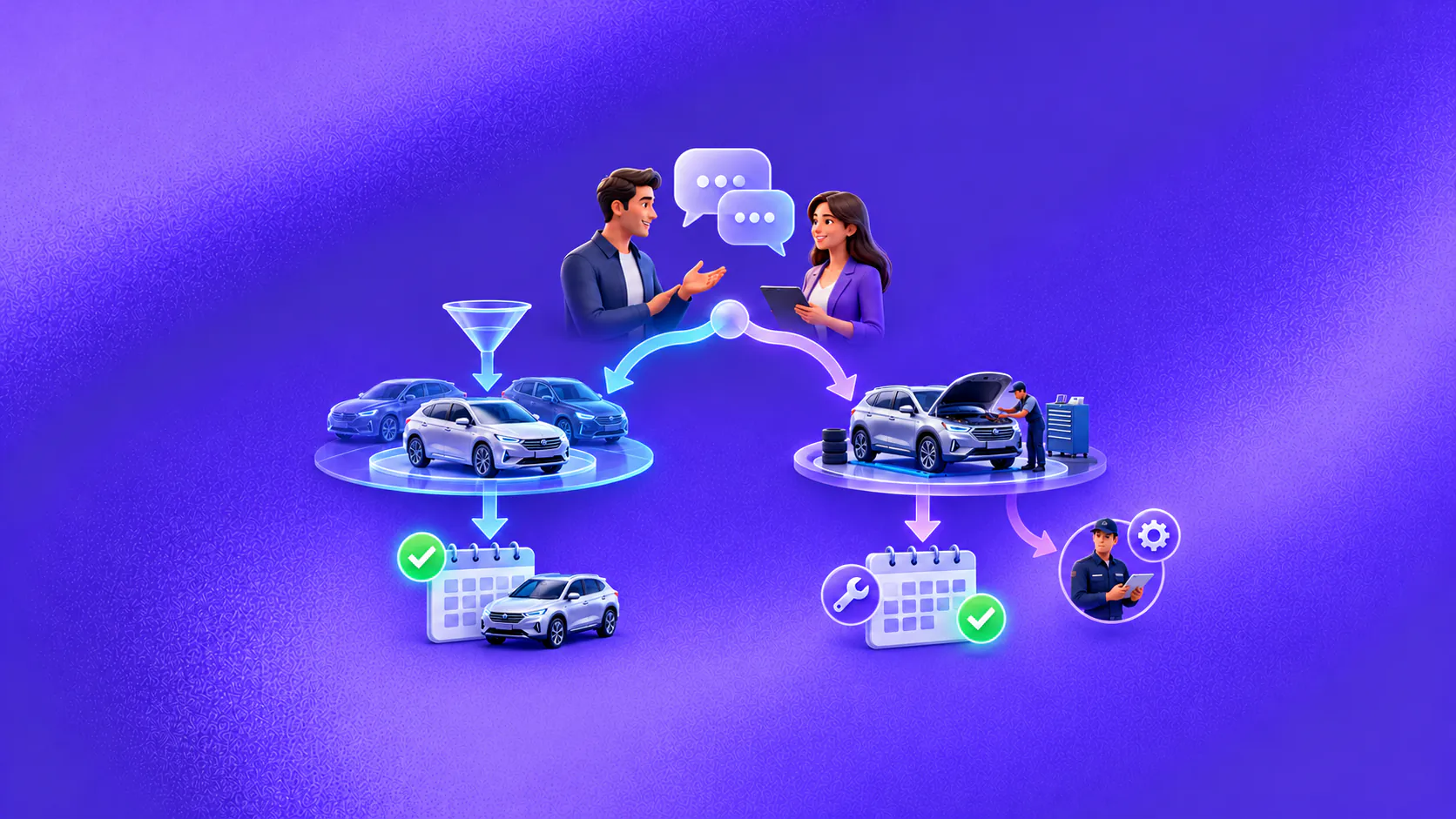
Conversational AI in automotive can answer approved vehicle and dealership questions, collect sales or service enquiries, book test drives and service appointments, share confirmed status and route exceptions. It should use current inventory and workshop systems and leave finance, safety and technical judgment to qualified staff.
Key takeaways
- Ground vehicle, price and availability answers in current inventory and approved dealership data.
- Confirm test-drive and service appointments through the scheduling system.
- Keep finance advice, safety diagnosis, repair judgment and negotiation with qualified people.
- Preserve the vehicle, customer need and actions already attempted when handing the conversation to staff.
What is conversational AI in automotive?
Conversational AI in automotive helps customers move from a vehicle or service question to a verified next step. For a dealership, that may mean finding a current vehicle, collecting an enquiry, booking a test drive, scheduling service or routing a request to the right employee.
The assistant needs live or regularly refreshed sources. Vehicle availability, price, offer terms, workshop capacity and job status can change quickly.
It should support sales and service communication without making unreviewed finance, safety or repair decisions.
Related must-read articles
- Conversational AI for appointment booking
- Conversational AI for lead qualification
- Automotive chatbots for dealership teams
How can it support vehicle discovery?
A shopper may describe the vehicle type, intended use, budget range, transmission, fuel preference or features. Conversational AI in automotive can retrieve current inventory that matches those explicit criteria.
The response should explain the match using inventory facts and identify when a detail needs confirmation. It should not claim that a vehicle is ideal for the customer, guarantee future value or present an unavailable unit as current stock.
If the customer asks about price, distinguish the listed price, an approved current offer and a negotiated quote. Route negotiation and exceptions to sales staff.
How should sales qualification work?
Qualification should prepare the next conversation, not make hidden judgments about the customer. Collect what affects routing: vehicle interest, location, timing, trade-in interest and preferred contact or appointment.
Finance interest can be routed to an authorised team. Do not infer creditworthiness or promise eligibility from the conversation.
The lead-qualification guide provides a transparent workflow, while the contacts platform helps preserve the enquiry record.
How can test-drive booking work?
The assistant verifies that the vehicle or suitable demonstration unit is available, checks the dealership and staff calendar and offers valid slots.
Conversational AI in automotive should collect the dealership’s approved requirements and confirm the booking only after the scheduling system returns success. If the chosen unit becomes unavailable, it should offer an approved alternative or route to sales.
Reminders should use the live appointment state so a changed or cancelled test drive does not receive an outdated message.
What does a sales scenario look like?
Imagine a customer asking about an automatic compact SUV in a stated budget. The assistant retrieves three current vehicles and explains which explicit criteria each matches.
The customer selects one and asks for a Saturday test drive. The system checks availability, offers two times and creates the appointment after the customer chooses. It returns a booking reference.
When the customer asks for a trade-in valuation and finance recommendation, the assistant collects a request and transfers the conversation to the authorised dealership team. It does not invent a value or lending outcome.
This keeps conversational AI in automotive focused on verified inventory and workflow while people own commercial judgment.
How can it support dealership service?
For service booking, collect the vehicle, requested work, preferred location and timing. A customer’s description of a warning light or noise can be recorded for the service team, but the assistant should not diagnose a safety or repair condition.
If the dealership has approved guidance for urgent safety language, follow it exactly and route the request. Do not reassure the customer based on a general model response.
The system can check workshop availability, create an appointment and return confirmation. It may also retrieve an existing job status after the required verification.
The detailed guide to conversational AI for appointment booking covers availability, confirmation evidence and scheduling exceptions. ZINQ’s appointment-booking use case shows how that workflow connects to customer conversations.
How should service-status messages work?
Use the workshop or dealer-management system as the source. Explain the current recorded stage and any approved next step.
“Inspection in progress” is different from “repair approved” or “vehicle ready.” Do not estimate completion unless the authorised source provides it.
If the customer asks about cost, additional work or a dispute, route the request to the service adviser with the vehicle and job context.
How do follow-up and channels fit?
Sales and service conversations may begin on a website, WhatsApp, Instagram, phone or email. Preserve the vehicle reference, customer’s stated need, booking state and owner across supported channels.
Use follow-up for consent-aware reminders, requested information and clear next steps. Stop sequences when the vehicle sells, the appointment changes, the service closes or the person opts out. The guide to conversational AI for customer retention explains how current state and suppression prevent irrelevant follow-up.
The omnichannel guide explains context continuity, and the channel overview covers available surfaces.
What needs human handoff?
Route negotiation, trade-in valuation, finance advice, credit decisions, safety concerns, repair diagnosis, complaints, unavailable inventory, failed booking actions and direct staff requests.
The receiving person needs the customer’s words, vehicle or job reference, preferences, answers already given, actions attempted and the reason for transfer. Human handoff should keep that record intact.
Which metrics should dealerships use?
Measure:
- Enquiries matched to current inventory;
- Stale or corrected vehicle information;
- Test-drive and service appointments confirmed;
- Booking and workshop-system failures;
- Routes accepted or reassigned by staff;
- Repeated questions and duplicate contacts;
- Follow-up against the correct vehicle or appointment state;
- Time to sales or service ownership.
Avoid attributing a vehicle sale, service revenue or customer outcome to conversational AI without an appropriate measurement method.
How should the first workflow launch?
Choose one dealership and one task, such as test-drive booking. Define inventory fields, required questions, calendar action, confirmation evidence and exception owner.
Test sold vehicles, stale prices, unavailable demonstration units, calendar conflicts, finance questions, safety language, tool failures and direct staff requests. Use the implementation guide for rollout.
ZINQ’s automotive industry page shows how vehicle enquiries, appointments and follow-up can connect. Conversational AI in automotive should make it easier to reach the person or system that can confirm the next step.
What should a dealership readiness checklist include?
Connect each conversational AI in automotive workflow to the right source. Vehicle discovery needs inventory, test drives need vehicle and staff calendars, service booking needs workshop capacity and job updates need the dealer-management system.
Audit model, trim, year, mileage, condition, price, offer terms, location and availability. Define how quickly changes appear and what happens when freshness is uncertain.
Test a vehicle selling during the conversation, a demonstration unit at another location, an expired offer, a trade-in request, a finance question, possible safety language, a rejected workshop slot and a missing job status.
Review handoffs with dealership staff. Sales needs explicit vehicle criteria and listings discussed. Service needs vehicle details, the customer’s description and appointment state. Finance needs only the approved context for its process.
Conversational AI in automotive should not mix those authority zones because they share a customer record. Use role-based access and minimum permissions.
Compare confirmed appointments and inventory answers with their systems after launch. Track stale data, corrected routes and failures. Conversational AI in automotive should expand only when the dealership can maintain the data and ownership behind the first workflow.
Frequently asked questions
How can dealerships use conversational AI?
Dealerships can use it for vehicle enquiries, lead intake, test-drive booking, service scheduling, maintenance-status requests, reminders and routing to sales or service teams.
Can an automotive chatbot recommend a vehicle?
It can retrieve vehicles that match explicit preferences and current inventory. It should explain the match and avoid unsupported claims about suitability, price or availability.
Can it diagnose vehicle problems?
This guide does not recommend safety or repair diagnosis. The system can collect the customer’s description and route it to qualified service staff under approved procedures.
Can it discuss vehicle finance?
It can provide approved general process information and arrange contact with an authorised finance team. Personal advice, eligibility and credit decisions require governed processes.
Conclusion
Conversational AI in automotive should connect an enquiry to a verified vehicle, appointment or staff owner. Keep inventory current, booking actions confirmed and finance, safety and technical decisions with qualified people.
READY TO SEE ZINQ IN ACTION?
From first enquiry to conversion, follow-up and support, ZINQ helps automate the next step while keeping your team in control.
Book a DemoAdditional resources
-
Automotive chatbot guide for dealerships and service teams
An automotive chatbot should route each conversation to sales, service or parts, use current dealership information, collect only the details needed for the next step and confirm appointments or requests from the system of record. Finance, trade-in and technical exceptions need clearly defined human ownership.
The ZINQ team · September 21, 2026 · Industries → Automotive -
AI booking agent: automate appointment requests without losing control
An AI booking agent handles appointment or reservation requests by collecting the right details, checking approved booking rules, confirming the next step, sending reminders and handing complex cases to a person.
The ZINQ team · September 29, 2026 · Workflows & Automation -
AI lead qualification agent: qualify enquiries before sales follows up
An AI lead qualification agent asks approved qualifying questions, records fit and intent evidence, identifies missing answers, routes ready leads and hands uncertain or high-value opportunities to sales with context.
The ZINQ team · September 29, 2026 · Sales & Conversion