Conversational AI for Customer Retention
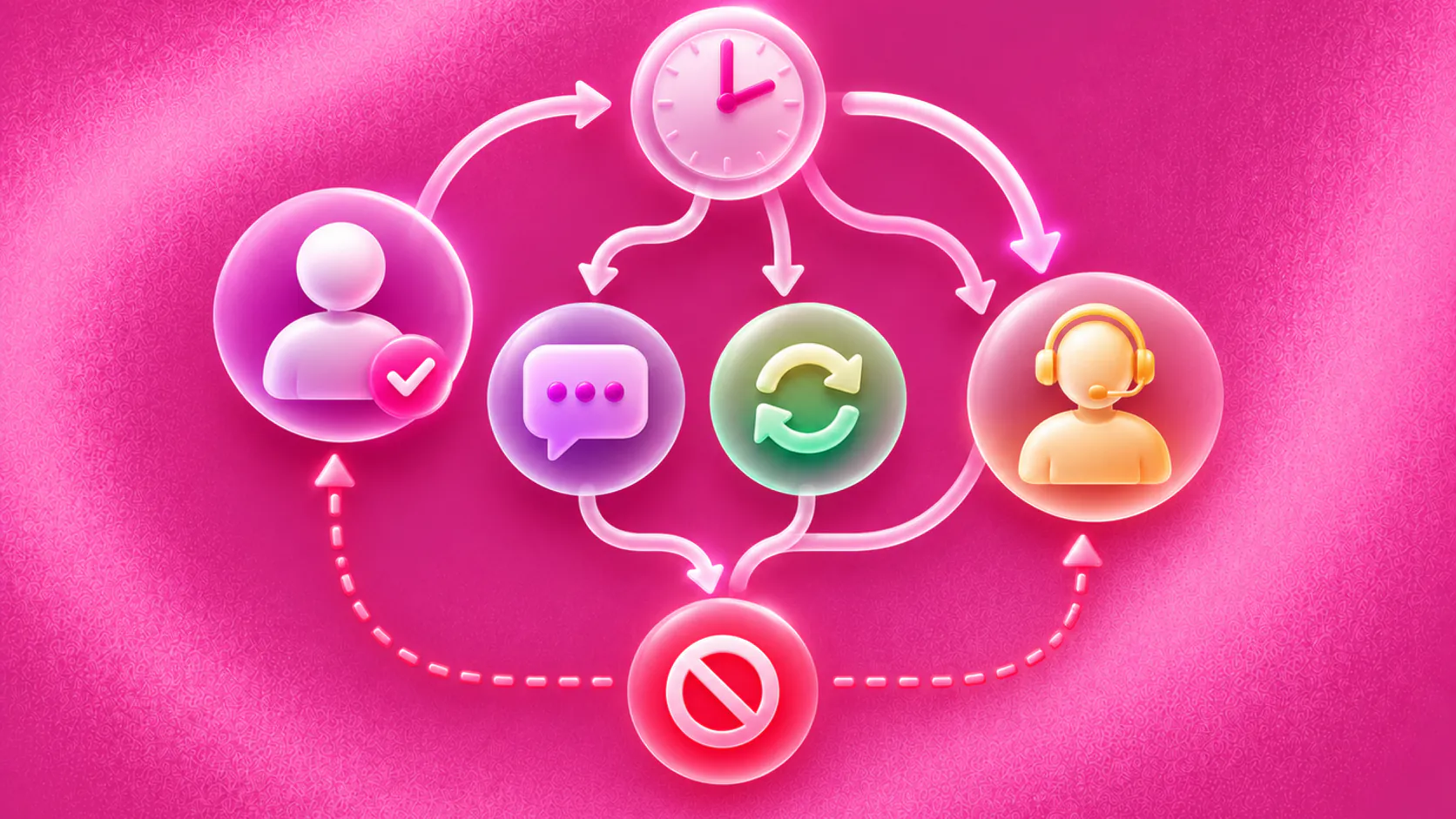
Conversational AI for customer retention can trigger timely, consent-aware follow-ups, answer questions, collect feedback, recover interrupted workflows and route at-risk customers to people. It should use current customer state, stop irrelevant messages and measure completed service or renewal outcomes carefully.
Key takeaways
- Retention messages should respond to a real customer state or signal, not a generic calendar blast.
- Stop or change follow-up when the customer acts, opts out, opens a complaint or moves to human ownership.
- Use conversation to understand the next need, then connect it to a permitted service, booking or recovery workflow.
- Measure the full outcome and account for other factors before claiming a retention effect.
What is conversational AI for customer retention?
Conversational AI for customer retention uses current customer context to start or continue a useful conversation after an earlier interaction. It can remind, answer, collect feedback, recover an incomplete task or route a problem to the right person.
Retention is the business outcome; the immediate workflow should be more specific. A customer may need to reschedule an appointment, understand a renewal, finish setup or get help after a poor service experience.
The system should respond to that need rather than sending generic “we miss you” messages to everyone who has been quiet.
Related must-read articles
- Conversational AI for customer support
- Conversational AI for appointment booking
- How AI support agents can improve customer retention
Which signals should trigger follow-up?
Use a customer state the business can explain and verify. Examples include:
- An appointment approaching without confirmation;
- An incomplete booking or form;
- A completed service that requires an approved check-in;
- A support issue awaiting customer information;
- An upcoming renewal or subscription milestone;
- Feedback indicating unresolved dissatisfaction;
- A customer becoming eligible for an approved win-back message.
Conversational AI for customer retention should not infer distress, financial condition or another sensitive state from casual language without an appropriate basis and review.
Every trigger needs eligibility and suppression rules. If the customer already completed the action, opted out, opened a complaint or moved to a person, the automated sequence should change or stop.
What follow-up workflows are practical?
Appointment reminders and recovery
Send a reminder from the current booking state and offer a simple way to confirm, reschedule or cancel. If the customer misses the appointment, a permitted recovery message can offer the next step without blame.
Post-service check-ins
Ask whether the agreed service was completed or whether the customer needs help. Use approved language and route unresolved issues. In clinical contexts, keep messages administrative and do not generate medical advice.
Incomplete-task follow-up
When a customer leaves a booking, application or setup flow, the assistant can ask whether help is needed. It should know which step remains and avoid asking the person to restart.
Renewal communication
Explain the approved process, answer general questions and connect the customer with an authorised owner. State, timing and content need to reflect the current agreement and relevant rules.
Win-back and re-engagement
Invite an eligible inactive customer to continue, update preferences or hear about a relevant current option. Keep frequency limited and make opt-out easy.
What does a stateful follow-up scenario look like?
Imagine a customer who started a service booking but stopped after selecting a date. The workflow records that no appointment was created.
After the permitted interval, the system sends a message on the consented channel: it asks whether the customer wants to continue and offers help. The customer says the chosen time no longer works.
The assistant checks current availability, offers two alternatives and submits the selected slot. When the booking system returns a reference, the follow-up sequence stops and the confirmation sequence begins.
If the calendar is unavailable, the assistant creates a staff task with the customer’s preference. It does not continue sending the incomplete-booking reminder.
This is a stateful retention workflow: the message changes when the customer state changes.
How can feedback lead to service recovery?
Feedback collection should do more than store a score. If the customer describes an unresolved problem, identify the relevant case, collect the minimum useful details and route it to someone who can act.
Do not let a negative response trigger a long automated apology with no owner. The customer needs a clear next step and realistic expectation.
The customer-support guide explains resolution and handoff. The feedback and CSAT use case connects collection with follow-up work.
How should message content be generated?
Use approved templates for required statements, then allow controlled variation where it improves clarity. Personalisation should come from relevant, permitted context rather than inserting every available customer field.
The assistant can adapt after the customer replies. It may answer a policy question, collect a preferred time or route a complaint. Those branches still need source and action controls.
The next-best follow-up guide covers message drafting. The business remains responsible for the trigger, offer, consent and outcome.
How do channels and consent affect the workflow?
Customers may prefer different channels for different tasks. A service confirmation might arrive over WhatsApp, while a detailed account message belongs in email or a secure portal.
Record channel permission, purpose and timing. Current platform policies and applicable rules should be checked for the market and message type. Do not move a conversation to another channel without an appropriate basis.
The omnichannel guide explains continuity. ZINQ’s campaigns and segments capability can organise eligible audiences while workflow state controls entry and exit.
What should stop automation?
Stop or transfer when:
- The intended action completes;
- The customer opts out or changes preference;
- A complaint, dispute or vulnerability appears;
- The customer requests a person;
- Identity or account state is uncertain;
- A connected action fails;
- The message no longer fits the customer’s current state;
- Frequency or campaign limits are reached.
Human ownership should suppress competing automated messages unless the operating design explicitly allows them.
How should retention be measured?
Start with the immediate workflow outcome:
- Bookings confirmed after an incomplete flow;
- Reminders that lead to a confirmed change;
- Support issues reopened and resolved;
- Feedback cases routed and owned;
- Renewal conversations reaching the authorised next step;
- Win-back messages receiving a relevant response;
- Opt-outs, complaints and frequency-limit events;
- Action failures and incorrect triggers.
To estimate a retention effect, use an appropriate comparison and account for eligibility, seasonality, product changes, pricing and other interventions. Do not attribute every returning customer to the conversational message.
How should the first workflow launch?
Choose one event and one outcome, such as an incomplete appointment booking that should become a confirmed booking or a staff-owned exception.
Document trigger timing, eligibility, consent, source data, message branches, actions, suppression and ownership. Test customers who already completed, changed details, opted out, replied unexpectedly or have an open complaint.
Use the implementation guide for testing and rollout. If the target action is a booking, the conversational AI for appointment booking guide explains confirmation and cancellation states. The follow-up and aftercare, win-back and contacts layer pages show how ZINQ can connect messaging with current customer state.
Conversational AI for customer retention is effective when it makes an existing relationship easier to continue. Relevance, restraint and accountable service recovery matter more than message volume.
What should a retention governance checklist include?
For every trigger used by conversational AI for customer retention, document the source event, eligibility window, exclusions, channels, frequency limit and intended outcome.
Define suppression before copy. A customer should leave the sequence after completing the action, opting out, entering a complaint, receiving human ownership or becoming ineligible. Test whether updates propagate quickly enough to prevent irrelevant messages.
Review samples with lifecycle, support and privacy owners. Ask why each person is included, what the message knows and whether that context is necessary. Personalisation should be understandable, not surprising.
Test delayed events, duplicate contacts, changed phone numbers, recently resolved complaints, cancelled bookings, accounts closed on another channel and replies with unrelated support needs.
Conversational AI for customer retention should route the new intent rather than force it into the campaign branch. The current need takes priority over the planned sequence.
Predefine measurement: delivery, replies, completed outcomes, opt-outs, complaints, human rework and failures. If estimating retention impact, specify the comparison and limitations. Conversational AI for customer retention should earn expansion through relevant, accurate follow-up rather than more sends.
Frequently asked questions
How can conversational AI improve customer retention?
It can make useful follow-up more timely, answer questions, collect feedback, recover incomplete tasks and connect customers with a person before an unresolved issue is forgotten.
What customer follow-ups can be automated?
Examples include appointment reminders, post-service check-ins, renewal reminders, incomplete-booking follow-up, feedback requests and win-back messages, subject to consent and business rules.
How do you avoid annoying customers?
Use current customer state, limit frequency, respect channel preferences and opt-outs, stop after the intended action and provide an easy route to a person.
How should retention impact be measured?
Define a target outcome, compare appropriate groups or periods, include delivery and eligibility rules and avoid attributing every renewal or return solely to the conversation.
Conclusion
Conversational AI for customer retention works when each message reflects a current customer need and leads to a useful next step. Keep triggers accurate, consent visible, suppression rules strong and service recovery human when needed.
READY TO SEE ZINQ IN ACTION?
From first enquiry to conversion, follow-up and support, ZINQ helps automate the next step while keeping your team in control.
Book a DemoAdditional resources
-
How AI support can contribute to customer retention
AI support may contribute to retention when it helps customers resolve problems and continue using a product. Faster replies alone do not establish a retention gain, and unresolved problems can persist behind an apparently efficient chat experience.
Pavan · June 30, 2026 · Customer Support & CX -
How to write useful AI-assisted follow-up messages
AI can draft a follow-up message from a verified conversation, but the message still needs a clear reason, an accurate next step and permission to use the chosen channel. Avoid invented urgency, discounts or claims about what the customer wants.
Pavan · July 29, 2026 · Sales & Conversion -
Insurance renewal reminders: workflow, templates and metrics
Insurance renewal reminders work best when they help customers review their renewal, ask questions and complete the next step. Build the workflow around current policy information, a useful message sequence and a clear route to your servicing team. Stop or change the sequence as soon as the customer's situation changes.
Pavan · August 11, 2026 · Industries → Insurance