AI Chatbot for Ecommerce: Use Cases and Benefits
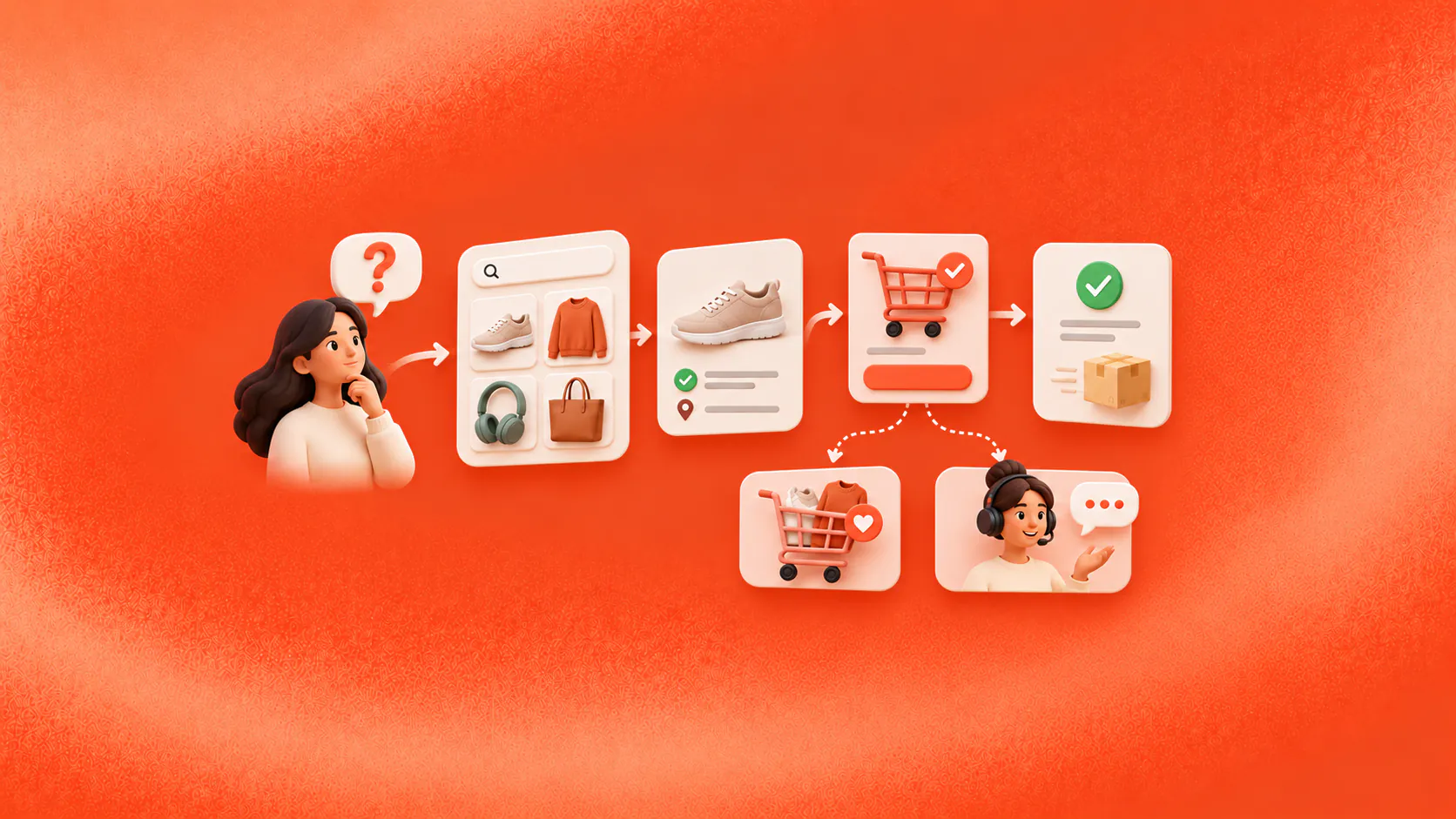
An ecommerce chatbot helps shoppers find suitable products, resolve questions that block checkout, recover permitted abandoned-cart conversations and get order or return support. It should use current catalogue, stock, delivery and order information from responsible systems.
Key takeaways
- Help shoppers choose by their declared requirements rather than generic recommendations.
- Use current connected data for stock, pricing, delivery, orders and returns.
- Cart recovery should address the reason for hesitation and respect consent and opt-outs.
- Measure completed shopping tasks alongside unresolved questions and failed actions.
Why do ready shoppers leave without buying?
A shopper may like a product but remain unsure about size, compatibility, delivery, ingredients, returns or whether another option fits better. A search box and category filter cannot always answer that decision question.
An AI chatbot for ecommerce can understand the shopper’s stated requirement, use approved catalogue information and move the conversation towards a suitable product, checkout or staff-assisted path.
Imagine an illustrative shopper choosing between two products for a specific use. The assistant asks one clarifying question, compares the relevant approved attributes and explains the return condition. It does not invent a discount or claim a perfect match.
Related must-read articles
- What is an AI chatbot?
- AI chatbot examples and use cases
- Conversational AI for ecommerce
- Ecommerce AI agent
- Abandoned-cart recovery workflow
Which AI chatbot for ecommerce use cases matter most?
Product discovery
An AI chatbot for ecommerce can ask about use, size, compatibility, budget or other declared requirements, then narrow the catalogue using current approved attributes. It should explain the basis of the suggestion.
Product and policy questions
Answer questions about materials, features, delivery, payment and returns from maintained sources. If the answer depends on live stock, price or location, retrieve it from the responsible commerce system.
Checkout assistance
Help resolve the question preventing purchase and return the shopper to the correct checkout step. Do not request payment information inside a conversation unless the approved, secure workflow specifically supports it.
Cart recovery
An AI chatbot for ecommerce can support permitted follow-up to a first-party contact and respond when the shopper explains why they stopped. The useful conversation addresses the obstacle; it does not merely repeat the cart or manufacture scarcity.
Back-in-stock and repeat purchase
Appropriate contacts may receive configured product updates, replenishment reminders or win-back communication when consent, channel and suppression rules allow it. The campaigns and segments platform should keep outreach separate from paid-ad management.
Order and return support
An AI chatbot for ecommerce can retrieve authorised order status, explain approved return steps and collect information for an exchange, cancellation or damaged-item request. Live details must come from connected systems.
Human-assisted shopping and service
A person steps in for exceptions, negotiation, complaints, uncertain product suitability, failed actions and direct requests. The human-handoff platform should transfer relevant cart, order and conversation context where available.
What information must stay current?
| Information | Responsible source |
|---|---|
| Product attributes | Maintained catalogue |
| Price and availability | Commerce or inventory system |
| Delivery estimate | Fulfilment or shipping service |
| Order status | Order-management system |
| Return eligibility | Approved policy plus order context |
An shopping assistant should say when current data is unavailable. A polished but stale stock or delivery answer can create more work than no answer.
How should cart recovery be handled?
Start with permission and timing. Stop outreach after purchase, opt-out, staff intervention or another suppression condition. When the shopper replies, continue from the actual concern rather than restarting a generic sales script.
The cart-recovery workflow and workflow platform can support a configured next step. ZINQ does not run Google, Meta or other paid advertising campaigns.
What should an shopping assistant measure?
Useful measures may include discovery conversations, suitable products reached, checkout questions resolved, carts resumed, completed purchases where the system can verify them, order questions answered, return requests created, failed actions, handoffs and opt-outs.
Review which questions repeatedly block purchase or create support contact. An shopping assistant should help commerce, service and operations teams improve the underlying information and workflow—not hide recurring problems behind more messages.
How should you start?
Choose one frequent obstacle with reliable data and a clear completion event. Test unavailable products, conflicting attributes, delivery exceptions, purchase completion, opt-outs and requests for staff.
Expand the shopping assistant only after the first journey uses current information, confirms actions and gives staff clear ownership of exceptions.
Additional resources
- Ecommerce solutions
- Product discovery
- Cart recovery
- Returns and exchanges
- Order tracking and support
Frequently asked questions
What is an ecommerce chatbot?
It is a conversational assistant for online shopping journeys, including product discovery, checkout questions, permitted cart recovery, order status and service intake.
Can a chatbot recover abandoned carts?
It can support permitted follow-up and answer the question that stopped checkout, but it should not manufacture urgency, contact people without an appropriate basis or guarantee recovery.
Can an ecommerce chatbot provide live stock information?
Only when it can retrieve current information from the responsible catalogue or inventory system. Static knowledge should not be presented as live availability.
Conclusion
Ecommerce chat creates value when it removes a real shopping obstacle and confirms the next step through current commerce systems.
READY TO SEE ZINQ IN ACTION?
Help shoppers move from questions to suitable products, checkout and owned service.
Book a DemoAdditional resources
-
What Is an AI Chatbot?
An AI chatbot is software that understands everyday language and responds through a customer conversation. For a business, it can answer approved questions, collect details, qualify an enquiry, complete a connected action and pass an exception to the right person.
The ZINQ team · October 23, 2026 · AI Chatbots -
AI Chatbot Examples and Practical Use Cases
Useful chatbot examples show a customer reaching an observable next step: a qualified enquiry, suitable option, confirmed booking, completed checkout, current status answer or well-prepared handoff. The best use case is frequent, bounded and connected to a result the business can verify.
The ZINQ team · October 22, 2026 · AI Chatbots -
Conversational AI for Ecommerce
Conversational AI in ecommerce can help shoppers discover products, answer approved questions, check orders, start returns, recover carts and reach support. Reliable systems ground answers in catalogue and policy data, confirm connected actions and preserve context when a person takes over.
The ZINQ team · October 19, 2026 · Industries → Ecommerce