AI Chatbot Online: What Businesses Should Look For
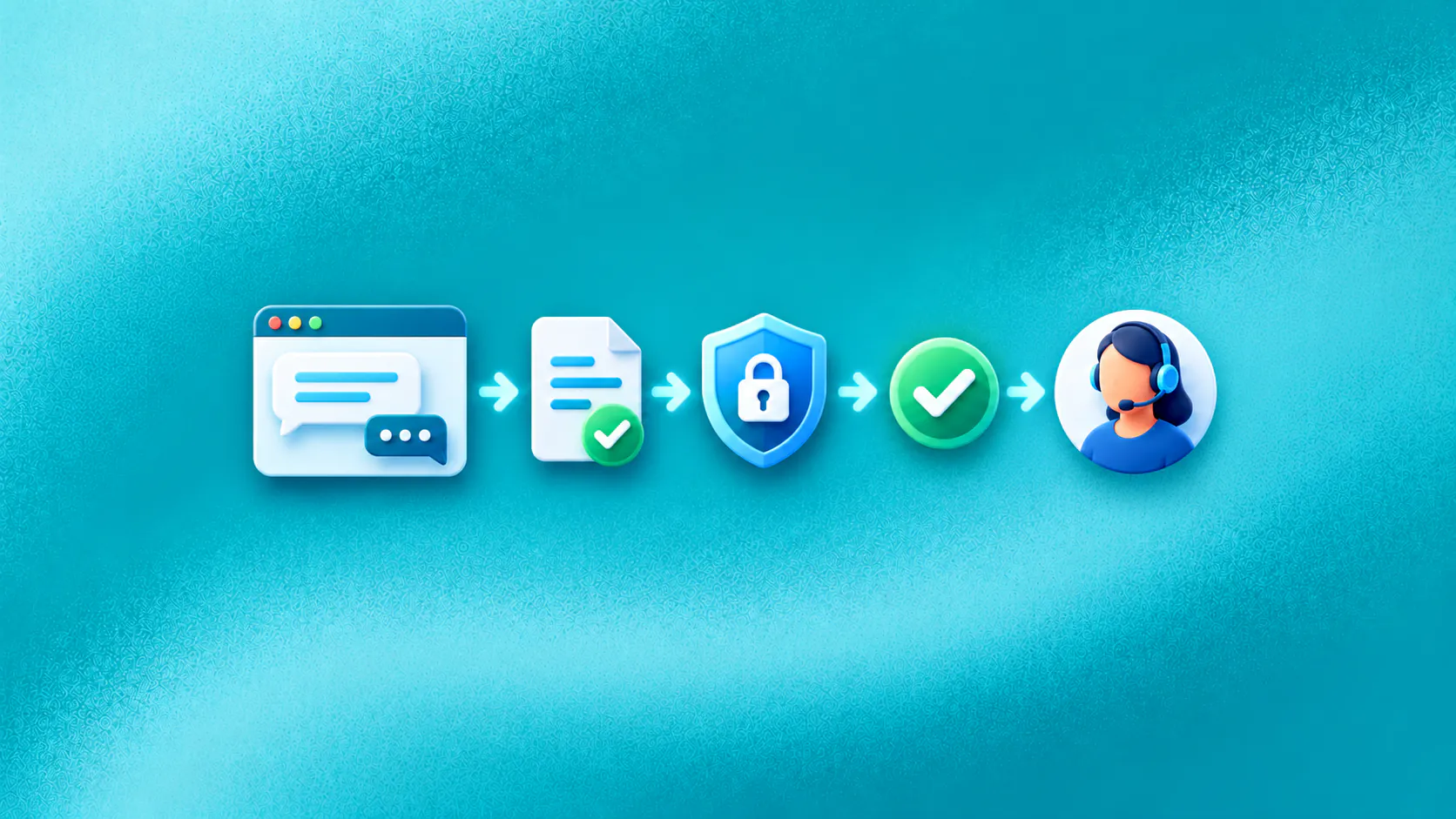
An AI chatbot online should do more than open a chat window. For business use, it should answer from approved information, protect customer data, support a defined customer journey, confirm connected actions and make human ownership clear when the conversation exceeds its authority.
Key takeaways
- Begin with the customer task you need to improve, not a free-tool comparison.
- Check how the chatbot uses business knowledge, customer data and connected systems.
- Test ordinary requests, missing information, failed actions and requests for a person.
- Compare the ongoing operating work as well as the advertised subscription price.
What does “AI chatbot online” mean for a business?
The phrase AI chatbot online can describe two very different things. One is a public tool where anyone can type a question. The other is a customer-facing chatbot that a business deploys on its website or messaging channels. Only the second is designed around customer journeys, approved information and accountable work.
That difference matters when a prospect asks about availability at 9 p.m. A public chat tool may produce a plausible answer. A business chatbot should use the current approved source, collect only the details needed and offer a verified next step. If it cannot confirm availability, it should say so and route the enquiry instead of guessing.
Related must-read articles
Start with the job the customer needs to finish
Before comparing an AI chatbot online, choose one frequent conversation. It might be qualifying a new enquiry, finding a suitable product, booking an appointment, checking an order or collecting a service request.
Write down five things:
- The customer’s goal.
- The information the chatbot may use.
- The details it needs to collect.
- The system or person that confirms completion.
- The exceptions that require staff.
This turns a broad software search into a practical evaluation. A polished demonstration is less important than whether the customer reaches the promised next step.
What should you check before using an online chatbot?
Approved answers rather than confident guesses
Ask where answers come from, who can update them and what happens when sources conflict. An online chatbot used for business should stay within maintained knowledge and make uncertainty visible.
Customer data and permissions
Check what the provider stores, where it is processed, who can access it and how long it is retained. Do not paste customer, health, banking or other sensitive information into a public tool simply because the interface is easy to use.
Connected actions and confirmation
If the chatbot claims to book, update, submit or cancel something, the responsible system should confirm the result. A fluent message is not evidence that the action happened.
Human ownership
Customers need a clear route when the request involves judgment, negotiation, a complaint, uncertain identity or a failed system. The handoff should include the useful context already collected without exposing unnecessary data.
Free tool or business platform?
| Evaluation point | Public or free chat tool | Business chatbot platform |
|---|---|---|
| Main purpose | General questions and experimentation | Defined customer journeys |
| Knowledge | Broad model knowledge or uploaded context | Maintained, approved business sources |
| Actions | Often limited or personal | Configured integrations and workflows |
| Ownership | Usually the individual user | Roles, teams, queues and permissions |
| Review | Basic history may be available | Operational review, logs and improvement process |
A free AI chatbot online can help a team explore language or prototype a flow. It should not be treated as production customer infrastructure until the business requirements have been verified.
Test the difficult path, not only the demo path
Use the same test for every option. Begin with an ordinary request, then remove required information, change the customer’s intent, ask an unsupported question, simulate an unavailable system and request a person.
For example, an appointment enquiry may appear successful when the requested time is open. The useful test is what happens when the calendar connection fails, the person changes location midway or the requested service needs staff review.
An AI chatbot online is ready for a pilot only when ordinary and failed paths are understandable to the customer and owned by the team.
How should you compare cost?
Look beyond the monthly fee. Include channel charges, usage, implementation, integrations, knowledge preparation, testing, review and staff time. A cheap tool becomes expensive when employees repeatedly correct its answers or recover incomplete requests.
The right comparison is cost per useful, verified journey—not cost per generated reply.
When should a person step in?
Human involvement should be a deliberate final use case, not a hidden failure. A person should take responsibility when the customer asks, the chatbot lacks reliable information, identity or authority is unclear, a connected action fails, or the decision requires professional judgment or empathy.
That boundary does not reduce the value of the chatbot. It lets the AI chatbot online complete routine work while giving staff the smaller set of conversations that genuinely need them.
Additional resources
Frequently asked questions
What is an AI chatbot online?
An AI chatbot online is a browser-accessible conversational tool or a chatbot deployed on an online customer channel. Business versions may also use approved knowledge, collect information, connect to workflows and transfer conversations to staff.
Can a free online chatbot be used for customer service?
Only after the business verifies data handling, access controls, knowledge sources, accuracy, integrations, handoff and commercial-use terms. A public chat tool is not automatically suitable for customer data or operational work.
How should a business test an online chatbot?
Use a real bounded journey and include incomplete questions, conflicting information, unsupported requests, system failure and a direct request for human help.
Conclusion
Choose an online chatbot by proving that it can complete one useful customer journey within your information, privacy and ownership rules.
READY TO SEE ZINQ IN ACTION?
Test one real customer journey across your channels, knowledge and team.
Book a DemoAdditional resources
-
What Is an AI Chatbot?
An AI chatbot is software that understands everyday language and responds through a customer conversation. For a business, it can answer approved questions, collect details, qualify an enquiry, complete a connected action and pass an exception to the right person.
The ZINQ team · October 23, 2026 · AI Chatbots -
AI-Powered Chatbot Platform: Buyer’s Guide for Business
The best AI chatbot platform is the one that can complete your chosen customer journey using approved knowledge, connected systems, clear permissions and accountable human handoff. Compare platforms through a real workflow rather than a feature count or scripted demonstration.
The ZINQ team · October 22, 2026 · AI Chatbots -
How to Create an AI Chatbot: Implementation Guide
To create an AI chatbot for business, choose one frequent customer task, define its completion and exception rules, prepare approved knowledge, connect only the required systems, test real messages and launch with a named operating owner.
The ZINQ team · October 22, 2026 · AI Chatbots