AI-Powered Chatbot Platform: Buyer’s Guide for Business
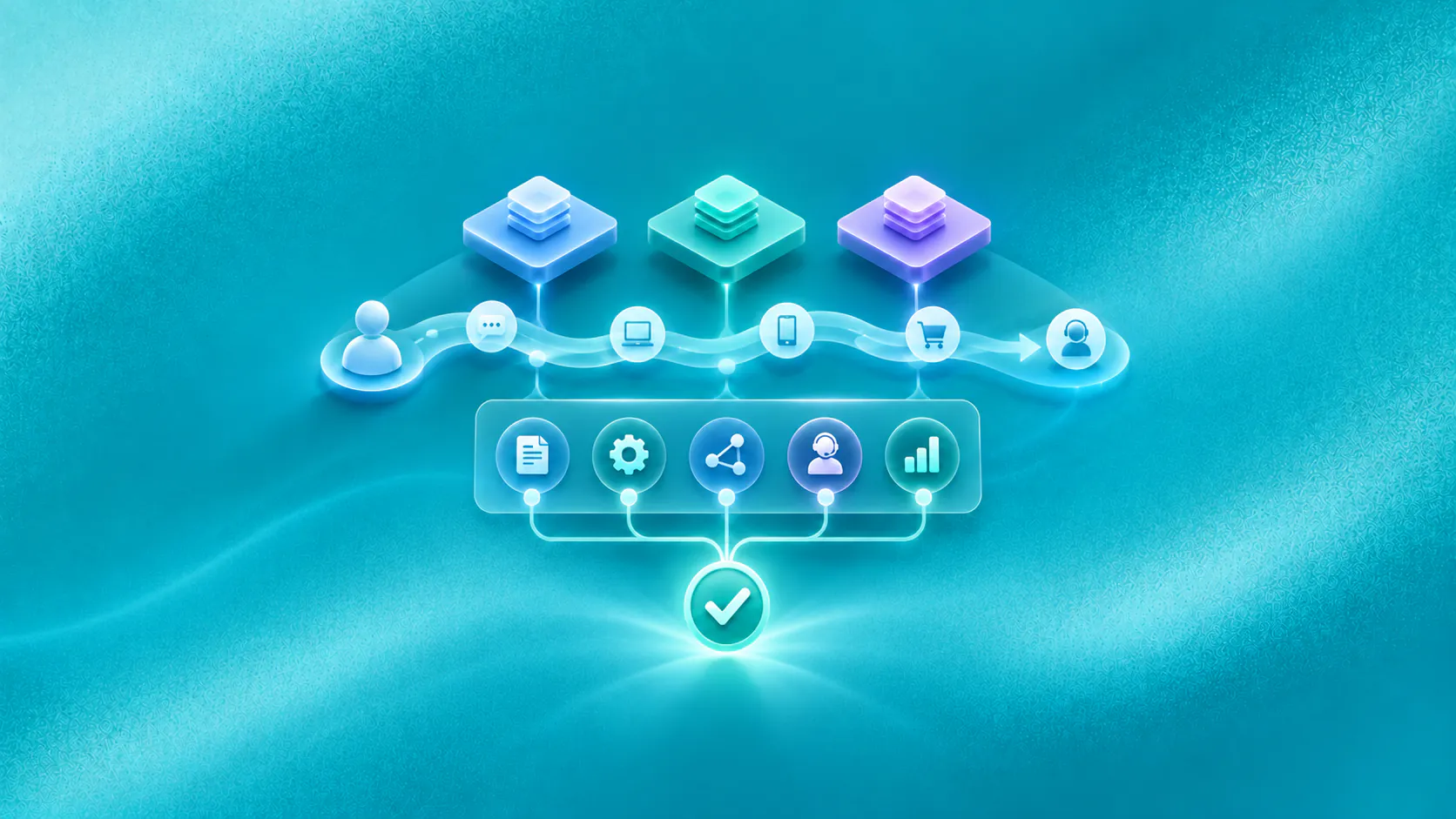
The best AI chatbot platform is the one that can complete your chosen customer journey using approved knowledge, connected systems, clear permissions and accountable human handoff. Compare platforms through a real workflow rather than a feature count or scripted demonstration.
Key takeaways
- Start with the customer journey the platform must complete, not a generic feature checklist.
- Verify knowledge sources, connected actions, confirmation, permissions and failure recovery.
- Test channel continuity and human handoff using realistic customer situations.
- Compare implementation, channel, usage and maintenance costs—not only the subscription price.
What makes an AI-powered chatbot platform right for your business?
The right AI-powered chatbot platform is not necessarily the one with the longest feature page. It is the one that can complete the customer work you need, operate within your rules and make failures visible to the people responsible for fixing them.
Imagine an illustrative business comparing three demos. Every assistant answers a prepared pricing question. Only one can recognise the required service, collect the relevant details, offer an eligible booking slot, confirm it in the calendar and pass an exception with context. The buying difference appears in the workflow, not the opening reply.
Related must-read articles
- What is an AI chatbot?
- AI chatbot examples and use cases
- How to create and implement an AI chatbot
- AI chatbot for customer support
- AI chatbot for lead generation and qualification
Start with the journey, not the platform demo
Write down one real customer task before contacting vendors. Define who starts it, what they are trying to finish, which information is required, what system confirms completion and when a person must take responsibility.
An AI-powered chatbot platform evaluation becomes clearer when every option receives the same journey. A lead-qualification test, for example, should include an ordinary enquiry, missing information, changed intent, an unsupported question and a direct request for staff.
Which capabilities should you evaluate?
Approved knowledge and answer boundaries
The system should use maintained sources, show what information it relied on where appropriate and stop when the source does not support an answer. Ask how the knowledge platform handles updates, conflicts and missing information.
Connected actions and confirmation
If the journey includes booking, status, task creation or another action, confirm which integrations and workflows are required. A message saying “done” is not completion until the responsible system accepts the action.
Channels and continuity
Check the channels your customers actually use. Then verify what happens when a conversation continues in the omnichannel inbox. Multi-channel presence does not automatically mean every identity and conversation is joined.
Human handoff and ownership
The AI-powered chatbot platform should transfer the customer’s goal, details already collected, answers shown, actions attempted and reason for escalation. Test whether the human-handoff process creates clear ownership rather than another queue with no context.
Permissions and governance
Review roles, action limits, identity requirements, consent, retention, audit history and approval steps relevant to the journey. More autonomy requires clearer control and recovery.
Analytics and review
Look for journey outcomes, drop-off, unresolved questions, workflow failures and handoff reasons that the implementation can actually capture. The analytics platform should help a team decide what to improve, not merely count messages.
Use one scorecard for every platform
| Evaluation area | Question to test | Evidence to request |
|---|---|---|
| Customer outcome | Can the customer complete the chosen task? | Confirmed result in the responsible system |
| Answer quality | Does it use approved, current information? | Test responses and source-management process |
| Failure handling | What happens when a tool or answer fails? | Recovery path and assigned owner |
| Handoff | Can staff continue without repetition? | Transferred conversation and context |
| Operations | Can your team review and improve it? | Logs, workflow visibility and permissions |
| Cost | What changes as usage and channels grow? | Subscription, usage, channel and implementation assumptions |
An AI-powered chatbot platform scorecard should weight the areas that matter to the chosen journey. Do not give every feature equal importance.
What should a realistic pilot include?
Use approved information and a limited set of connected actions. Include real variations without using personal or sensitive customer data. Test unclear questions, unavailable systems, duplicate requests, opt-outs, unsupported requests and requested human help.
The pilot needs an operating owner. Someone must review conversations, approve knowledge changes, investigate failed actions and decide whether the journey is ready to expand.
How should you compare cost?
Include platform subscription, model or usage charges, messaging-channel fees, implementation, integrations, testing, knowledge maintenance and ongoing review. A lower advertised price can cost more if staff must manually repair incomplete journeys.
The best AI-powered chatbot platform is therefore the best operational fit—not automatically the cheapest contract or the most technically impressive demonstration.
What decision should you make at the end?
Choose the platform only if it can complete the selected journey, respect its boundaries, expose failures and fit the team’s ability to operate it. Record what remains manual and what evidence is still missing.
The chosen platform should earn a broader role through reliable customer outcomes. Avoid committing every channel and workflow before one bounded journey works.
Additional resources
- Explore the ZINQ platform
- AI agents
- Workflow automation
- Customer-service use case
- Lead-qualification use case
Frequently asked questions
What is an AI chatbot platform?
An AI chatbot platform provides the tools to build, operate and review conversational customer journeys across supported channels, knowledge sources, workflows and human teams.
How should a business compare chatbot platforms?
Give each platform the same real customer journey, approved knowledge, exception cases and success criteria, then compare verified outcomes and operating requirements.
Is the platform with the most features always best?
No. Unused features add complexity. The best fit is the platform that reliably completes the required work within the business's controls, skills and budget.
Conclusion
Choose a platform by proving one useful customer journey end to end. Expand only after the ordinary path, difficult cases and operating ownership work in practice.
READY TO SEE ZINQ IN ACTION?
Test one customer journey across knowledge, workflows, channels, analytics and human ownership.
Book a DemoAdditional resources
-
What Is an AI Chatbot?
An AI chatbot is software that understands everyday language and responds through a customer conversation. For a business, it can answer approved questions, collect details, qualify an enquiry, complete a connected action and pass an exception to the right person.
The ZINQ team · October 23, 2026 · AI Chatbots -
AI Chatbot Examples and Practical Use Cases
Useful chatbot examples show a customer reaching an observable next step: a qualified enquiry, suitable option, confirmed booking, completed checkout, current status answer or well-prepared handoff. The best use case is frequent, bounded and connected to a result the business can verify.
The ZINQ team · October 22, 2026 · AI Chatbots -
How to Create an AI Chatbot: Implementation Guide
To create an AI chatbot for business, choose one frequent customer task, define its completion and exception rules, prepare approved knowledge, connect only the required systems, test real messages and launch with a named operating owner.
The ZINQ team · October 22, 2026 · AI Chatbots