AI Lead Generation Chatbot: Capture and Qualify Enquiries
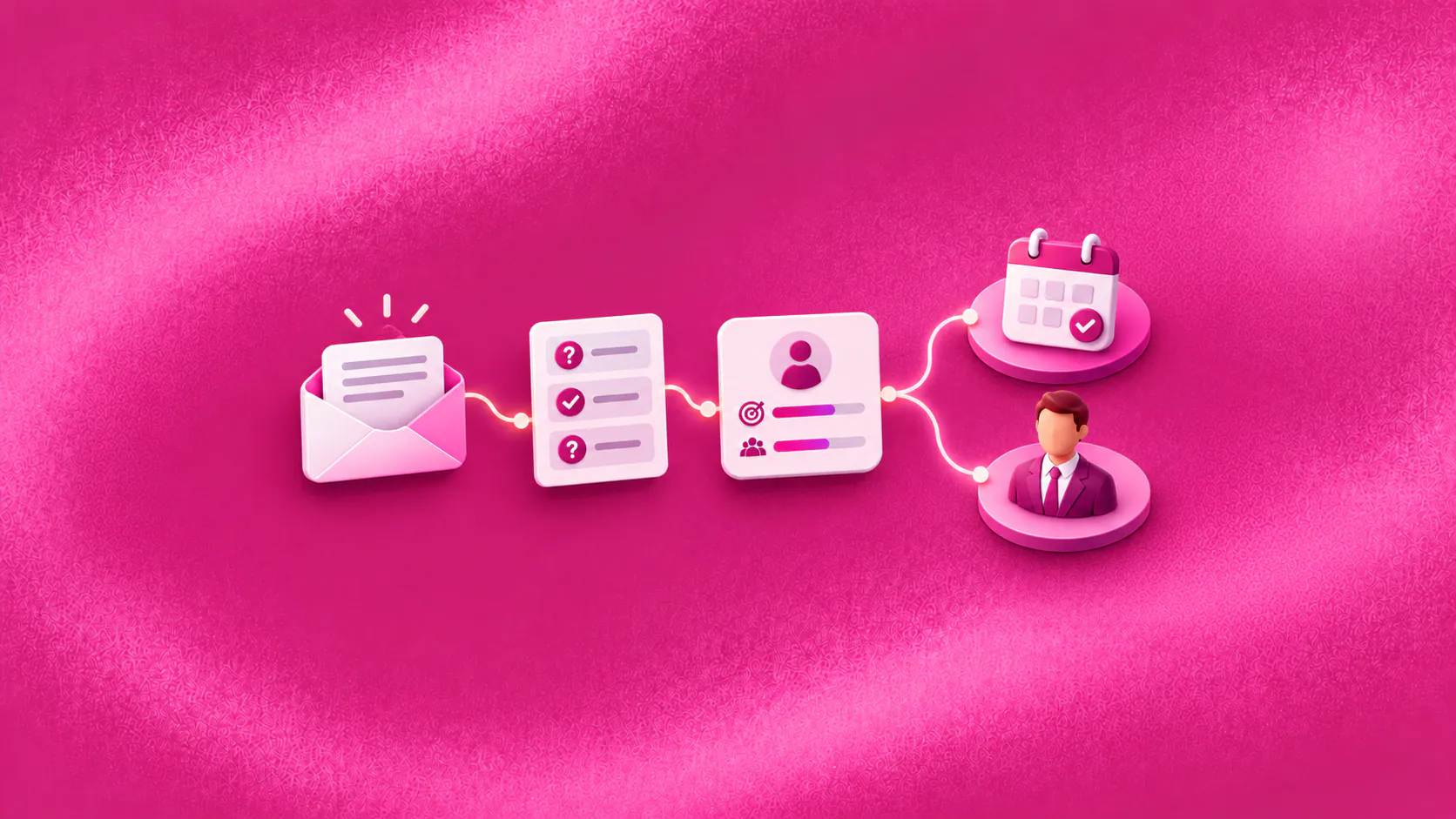
A lead generation chatbot engages an incoming enquiry, answers approved questions, collects the details that affect fit and moves the prospect to booking, follow-up or a suitable resource. It supports demand already reaching the business rather than running paid advertising.
Key takeaways
- Use a lead generation chatbot after an enquiry reaches the business or for permitted follow-up to first-party contacts.
- Qualification questions should change eligibility, routing, preparation or the next action.
- The prospect needs a useful answer and next step, not an unexplained score.
- Pass the original request, explicit answers and routing reason to the receiving sales owner.
What is an AI lead generation chatbot?
An AI lead generation chatbot engages an incoming prospect, answers approved questions, collects relevant details and moves the enquiry towards booking, sales follow-up or a suitable resource.
It does not create demand by running ads. ZINQ’s role begins when an enquiry reaches the business or when the business sends permitted communication to an appropriate first-party contact.
Imagine an illustrative enquiry arriving after hours: “Can this work across five locations, and how soon could we start?” An acknowledgement leaves both questions open. An AI lead generation chatbot can explain the approved service information, ask which locations and workflow matter, and offer the correct booking or follow-up path.
The prospect receives progress while interest is current. Sales receives the original question, collected facts and a clear next action.
Related must-read articles
Where does chatbot lead generation begin?
The workflow can begin on a website, WhatsApp, Instagram, Telegram or another supported channel. The source may provide useful context, but the conversation should focus on what the prospect asks now.
An AI lead generation chatbot can also support consented follow-up to contacts the business already holds. It must follow channel rules, frequency limits, suppression lists and opt-out requests. It should not be described as paid-media campaign execution or advertising attribution.
The customer conversation channels page shows how channels fit into the wider system.
What should qualification mean?
Define qualification with observable business criteria and a useful next step. Replace vague labels such as “hot lead” with facts that affect eligibility, routing or preparation.
For a business service, relevant criteria might include the problem, intended use, location, timeline and required integration. Not every answer should be mandatory. Some determine whether the service fits; others prepare the first sales conversation.
The qualification flow should use declared information and approved rules. It should not infer protected or sensitive traits. Credit, employment, insurance, healthcare and similar consequential decisions need appropriate authorised ownership.
Which questions should the chatbot ask?
Each question should change one of four things:
- Whether the offering can help.
- Which team or territory should respond.
- What the receiving person needs to prepare.
- Which action should happen next.
Ask in customer language. “What are you trying to improve?” is easier than an internal field such as “primary pain category.” If the prospect already stated a location or team size, reuse it and confirm only when needed.
Do not make the assistant deliver a long form one field at a time. The conversation must answer the prospect’s questions as well as collect information for the business.
How does a qualified enquiry move forward?
When the declared information meets the agreed criteria, the next action should be immediate and specific. The chatbot may offer a demo slot, create a sales task, assign an owner or provide a suitable resource.
The responsible system must confirm the booking or record. If the calendar or CRM fails, the assistant should preserve the request and create an owned recovery path rather than telling the prospect it succeeded.
The appointment-booking use case, workflow platform and contacts platform show how the next step can connect to business records.
What happens when the prospect is not ready?
Not every useful enquiry should become an immediate meeting. A prospect may be researching, waiting for budget or gathering information for someone else.
The chatbot can provide an appropriate resource, record the stated timing or offer permitted follow-up. An unknown timeline is not a negative answer. The goal is to give the person a useful path without forcing a booking.
For existing first-party contacts, an AI lead generation chatbot may support approved re-engagement or a reply to a broadcast. Consent and opt-out still apply.
How should sales receive the conversation?
The receiving person needs the prospect’s original request, explicit answers, route reason and action already taken. This lets the first sales response continue the conversation rather than restart discovery.
Across channels, supported conversations may appear in one omnichannel inbox. Do not assume that every conversation from one person is automatically merged across identities or channels.
A person should step in for negotiation, an unusual requirement, a strategic opportunity, unclear authority or a direct request for sales. The human handoff platform describes the transfer context.
What should a lead qualification assistant measure?
Conversation volume does not show whether demand moved forward. Useful measures include:
- Eligible enquiries reaching a confirmed next step.
- Meetings booked and attended.
- Routes accepted or corrected by sales.
- Missing required details and duplicate records.
- Time from first enquiry to assigned ownership.
- Abandonment at each question.
- Reasons for review or an alternative route.
Read conversations beside the numbers. High booking volume may hide poor-fit meetings when criteria are too loose. Low completion may reveal a confusing question or failed calendar rather than weak demand.
How should the first workflow launch?
Choose one inbound source and one sales motion. Define eligible enquiries, necessary questions, routing rules, next actions and the record that proves completion.
Test clear fits, poor fits, incomplete information, contradictory answers, existing customers, job applicants, vendors and requests for a person. The implementation guide provides the broader method.
A lead qualification assistant succeeds when the prospect understands what happens next and sales has enough context to respond usefully. Filling every CRM field is not the purpose.
Additional resources
- Lead qualification use case
- ZINQ AI agents
- AI lead qualification agent
- AI sales agent
- Human-in-the-loop AI agents
Frequently asked questions
What is a lead generation chatbot?
A lead generation chatbot engages an incoming prospect, answers approved questions, collects relevant details and moves the enquiry to a booking, sales owner, follow-up or suitable resource.
Can a chatbot qualify leads?
Yes. It can ask approved questions and apply transparent business rules to declared information. People should retain responsibility for sensitive, unusual or consequential decisions.
Does ZINQ run paid lead-generation campaigns?
No. ZINQ begins when an enquiry reaches the business or when the business contacts an appropriate, consented person in its first-party database.
What should a lead chatbot measure?
Measure accepted enquiries, confirmed bookings, routes corrected by sales, missing information, abandonment, duplicate records and time to assigned ownership.
Conclusion
A lead generation chatbot is useful when it gives the prospect a relevant next step and gives sales enough context to continue the buying conversation.
READY TO SEE ZINQ IN ACTION?
From first enquiry to conversion, follow-up and support, ZINQ helps automate the next step while keeping your team in control.
Book a DemoAdditional resources
-
What Is an AI Chatbot?
An AI chatbot is software that understands everyday language and responds through a customer conversation. For a business, it can answer approved questions, collect details, qualify an enquiry, complete a connected action and pass an exception to the right person.
The ZINQ team · October 23, 2026 · AI Chatbots -
AI Chatbot Examples and Practical Use Cases
Useful chatbot examples show a customer reaching an observable next step: a qualified enquiry, suitable option, confirmed booking, completed checkout, current status answer or well-prepared handoff. The best use case is frequent, bounded and connected to a result the business can verify.
The ZINQ team · October 22, 2026 · AI Chatbots -
AI lead qualification agent: qualify enquiries before sales follows up
An AI lead qualification agent asks approved qualifying questions, records fit and intent evidence, identifies missing answers, routes ready leads and hands uncertain or high-value opportunities to sales with context.
The ZINQ team · September 29, 2026 · Sales & Conversion