AI sales agent: what it can handle before a rep steps in
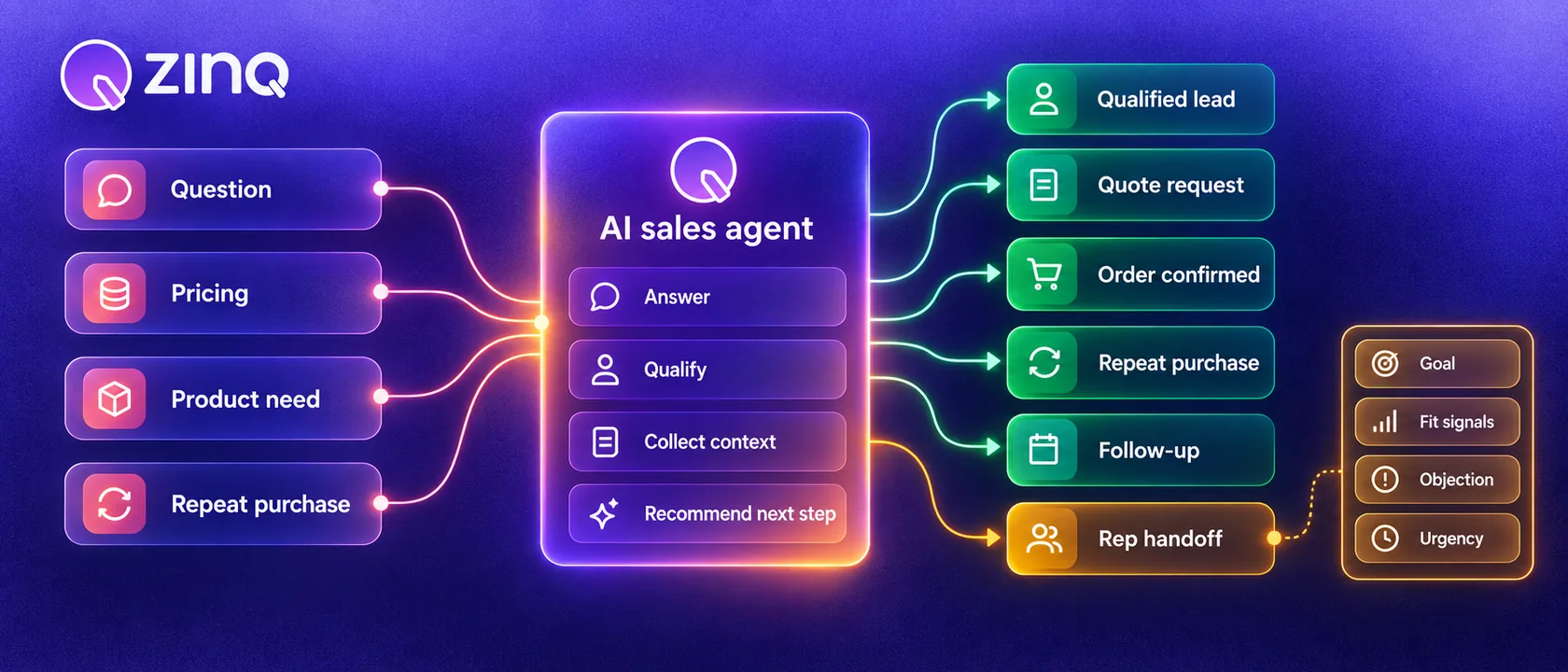
An AI sales agent handles early sales conversations by answering approved questions, qualifying intent, collecting context, recommending the next step and handing high-intent or complex enquiries to a human sales rep.
Key takeaways
- An AI sales agent should move a buyer toward a useful next step, not only reply faster.
- The safest scope is early qualification, routing, booking and follow-up from approved knowledge.
- Sales handoff needs the buyer's goal, fit signals, objections, urgency and next requested action.
- Measure booked next steps, qualified conversations and handoff quality instead of message count.
What an AI sales agent does
An AI sales agent handles the first part of a sales conversation when the buyer wants an answer, a recommendation or a next step before a person is available. It can reply on WhatsApp, web chat, Instagram or another channel, but the channel is not the point. The job is to move the conversation forward without losing context.
That usually means answering questions from approved knowledge, asking qualifying questions, checking fit, suggesting the right next action and sending the lead to a human when the conversation needs judgment. For many businesses, this is the gap between a contact form and a salesperson. A form waits. A basic sales chatbot answers a few questions. An AI sales agent collects enough context to help the team act.
The boundary matters. An AI sales agent should not invent pricing, promise discounts or handle negotiation without rules. It should be clear about what it can answer and when it must hand over.
How an AI sales agent differs from a sales chatbot
Many buyers still use the phrase sales chatbot because it is familiar. That is fine for search intent. The problem starts when the product behaves like a generic chatbot after the lead asks a serious question.
| Buyer need | Sales chatbot | AI sales agent |
|---|---|---|
| Quick answer | Replies from a script or FAQ | Replies from approved knowledge and context |
| Lead qualification | Asks fixed questions | Adapts questions to fit, intent and readiness |
| Next step | Shows a link or form | Books, routes, follows up or hands off |
| Rep handoff | Sends a transcript | Sends goal, evidence, objections and urgency |
| Measurement | Counts chats and replies | Tracks qualified outcomes and booked steps |
The practical test is simple. If the tool only chats, call it a chatbot. If it understands the buyer’s goal, gathers missing details and triggers the next safe step, it is acting like an AI sales agent.
Where it fits in the sales process
An AI sales agent works best before the sale becomes complex. It can handle first response, enquiry capture, lead qualification, appointment booking, follow-up and routing. It should not replace a sales rep when the buyer wants a custom quote, a negotiated term, a detailed product fit conversation or a high-value decision.
For example, a customer sends a WhatsApp message asking whether a clinic, real estate team, travel company or SaaS business can help with a specific service. The agent can answer basic availability questions, collect the buyer’s need, ask about timing and pass the qualified lead to the right person. If the buyer is not ready, it can place them into a follow-up path.
This is where ZINQ’s lead qualification workflows and AI agents fit. The agent should use approved business knowledge, work across the channels where leads arrive and preserve a clean human handoff when the deal needs a person.
A simple sales-agent workflow
Start with one repeatable enquiry type. A demo request is a good example.
- The buyer asks a question on the website or WhatsApp.
- The agent identifies the buyer’s goal.
- It answers only from approved sales knowledge.
- It asks for missing details such as company type, use case, urgency and preferred contact method.
- It checks routing rules. For example, location, service line, value or availability.
- It books a slot, starts follow-up or sends the lead to a rep.
- The rep receives the buyer’s goal, answers, objections and next action.
This workflow is deliberately narrow. Narrow does not mean weak. It means the team can review it, improve it and trust it before adding more sales paths.
What to include in the handoff
The handoff is where many automated sales flows fail. The rep should not receive “new lead from chatbot” with a transcript and no summary. That creates more work.
A useful handoff includes:
- what the buyer wants
- which product, service or location they asked about
- fit signals such as budget range, company type, location or urgency
- questions already answered
- objections or concerns
- what the agent could not verify
- the next action the buyer requested
The agent should also stop when the customer becomes frustrated, asks for a person or moves into a high-value decision.
How to measure it
Do not judge an AI sales agent by messages sent. That rewards noise.
Measure the work it completes:
- qualified conversations
- booked demos, appointments or callbacks
- leads routed to the correct owner
- handoffs accepted by reps without rework
- follow-ups that stop when the buyer responds
- lead response time by channel
- disqualification accuracy
If reps keep asking the same questions again, the agent is collecting the wrong information. If buyers keep dropping after qualification, the next step may be unclear. If handoffs are fast but low quality, the workflow is not ready for more volume.
Common mistakes
The first mistake is giving the agent too much freedom. Sales conversations include pricing, timing, fit, urgency and expectations. The agent needs approved answers and clear limits.
The second mistake is hiding the handoff path. A buyer should not feel trapped in automation. Give them a route to a person when the request needs one.
The third mistake is treating every lead the same. A student asking a general question, a clinic asking for automation help and an enterprise buyer asking for security details should not follow the same path.
Conclusion
An AI sales agent earns its place when it helps buyers get to the right next step faster and gives the sales team better context. Start with one sales workflow, define what the agent may answer, decide what it must collect and make the handoff useful enough that a rep can continue without starting over.
Frequently asked questions
What is an AI sales agent?
It is an AI agent used in sales conversations to answer approved questions, qualify buyer intent, collect missing details, suggest the next step and hand the lead to a person when judgment or negotiation is needed.
Is an AI sales agent the same as a sales chatbot?
People often search for sales chatbot when they want faster lead response. An AI sales agent should go further by using business knowledge, lead rules, routing logic and human handoff.
What should a sales agent not do?
It should not invent pricing, promise discounts, negotiate unsupported terms, qualify a lead without evidence or continue when a buyer needs a human decision.
Where should a business start?
Start with one enquiry path such as demo requests, service enquiries or WhatsApp lead capture. Define the questions, disqualifiers, routing rules and handoff packet before expanding.
Conclusion
A useful AI sales agent is not a louder contact form. It qualifies the conversation, keeps promises inside approved limits and gets the right lead to the right person with enough context to continue.
READY TO SEE ZINQ IN ACTION?
From first enquiry to conversion, follow-up and support, ZINQ helps automate the next step while keeping your team in control.
Book a DemoRelated articles
-
AI chatbot for business: a practical buyer guide
Choose an AI chatbot for business by starting with the customer task it must complete, then test its knowledge, actions, handoff, channels, integrations, data controls and operating requirements. The best option is the one that completes your verified workflow reliably, not the one with the longest feature list.
The ZINQ team · September 21, 2026 · AI Chatbots -
Planning lead capture and follow-up with ZINQ
A lead workflow should capture the customer's request, collect relevant details and deliver an owned next step. With ZINQ, confirm the supported qualification, action and follow-up configuration for that sequence before rollout.
Pavan · June 10, 2026 · Sales & Conversion -
How to qualify website enquiries with an AI agent
An AI qualification flow should collect the minimum information needed to route an enquiry and offer a relevant next step. Use explicit business criteria, keep unknown answers visible and let visitors ask questions before demanding a full profile.
Pavan · June 30, 2026 · Sales & Conversion