How Does Voice AI Lead Qualification Hand Off to Sales?
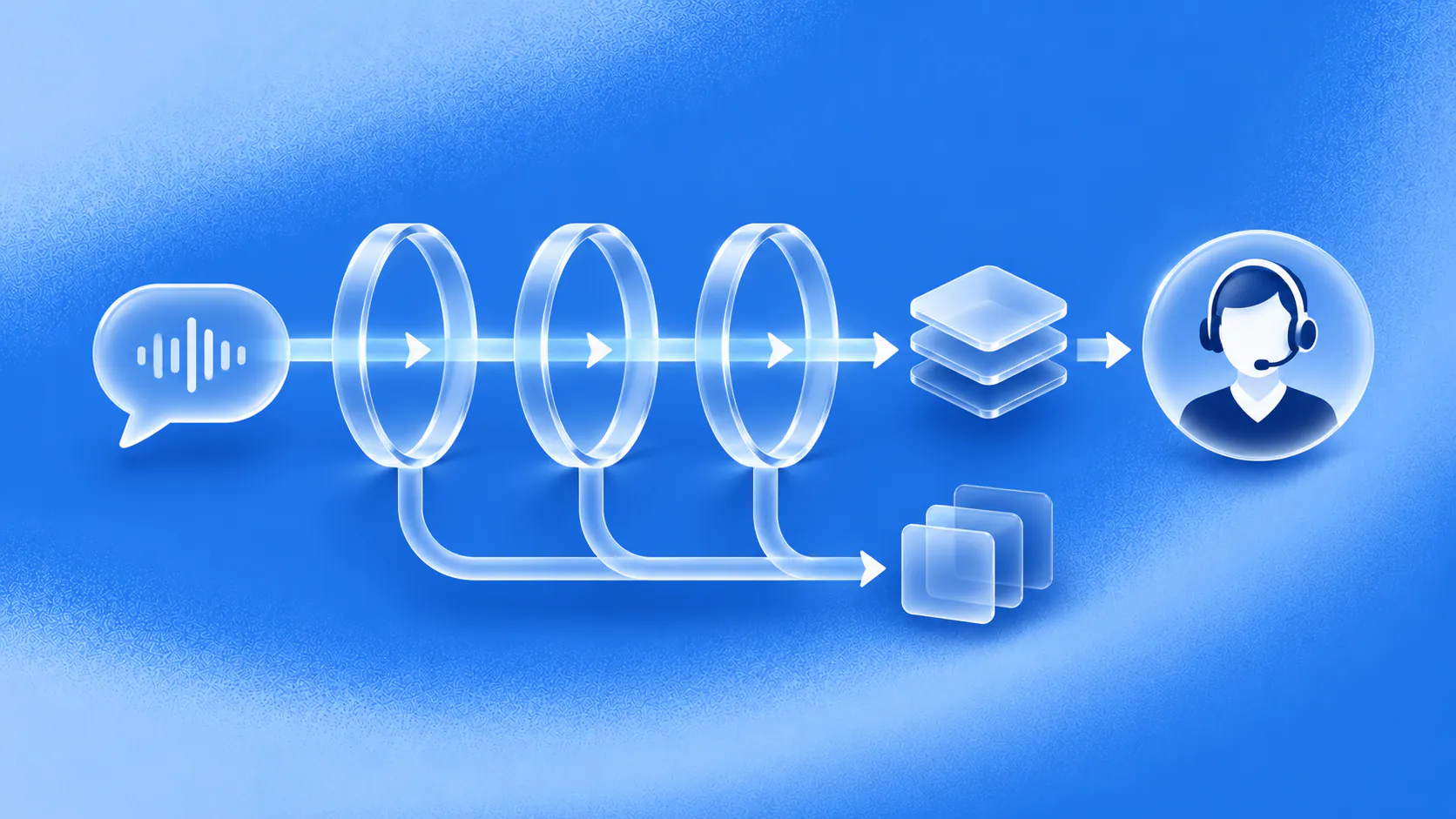
Voice AI lead qualification asks business-defined questions, captures what a prospect declares and routes the enquiry with context; sales retains ownership of judgment, discovery, exceptions and the commercial relationship.
Key takeaways
- Qualification should collect declared needs, not infer sensitive traits.
- Questions and routing rules must reflect the business's actual sales process.
- A useful handoff explains fit, uncertainty, next step and ownership.
- Sales should review false routes, missing context and stalled follow-up.
How does voice AI lead qualification hand off to sales?
Voice AI lead qualification asks the questions a business has defined, records what the prospect says and routes the enquiry toward an appropriate next step. A useful sales handoff includes the stated need, relevant answers, open questions, action already taken and a clear owner.
It should prepare sales, not pretend to replace sales judgment. A prospect can meet configured criteria and still need discovery, an exception or a conversation with someone who understands the commercial context.
The Lead Qualification use case owns the general workflow. This guide focuses on the spoken call and handoff. For the category foundation, read what an AI voice agent is.
Related reading
- How conversational AI works
- Where humans remain in the loop
- Guardrails for customer conversations
- How to implement conversational AI
- What AI-agent analytics should reveal
Start with the sales decision the call supports
Do not ask every possible question. Decide what the team needs to choose the next step. That might be whether to book a discovery call, route to a specialist, provide approved information or place the enquiry into a longer follow-up path.
Voice AI lead qualification works best when the criteria are explicit. Useful questions may cover the prospect’s stated problem, desired time frame, location, product or service interest and preferred next step. The appropriate set depends on the business and should avoid unnecessary sensitive data.
If different salespeople use different unwritten rules, document the process before automating it. A voice system cannot make an inconsistent qualification policy fair or useful by applying it faster.
What should the conversation collect?
Collect declared information tied to a legitimate business decision. For example:
- What is the prospect trying to accomplish?
- Which service or product are they asking about?
- Which location or service area applies?
- What time frame have they stated?
- Which constraints have they volunteered?
- What next step do they want?
- How and when may the business follow up?
The system should not infer protected, sensitive or personal characteristics from accent, voice, name or speaking style. Qualification by stated need is different from hidden profiling.
Follow an illustrative call
A prospective customer calls a multi-location service business and asks whether a particular service is available nearby. The system answers from approved knowledge, asks which location is convenient and learns that the caller wants to act within two weeks.
The configured criteria indicate that the relevant team should continue. The caller would like an appointment, so the workflow checks the appointment-booking path. If availability is returned, the prospect may choose a time. If not, the system creates an owned sales callback rather than promising one without a record.
The handoff says what the prospect requested, which location they chose, their stated time frame, questions already answered, booking result and any unresolved issue. It does not label the person “high value” based on unsupported inference.
What makes a handoff useful?
A useful human handoff answers five questions for the salesperson:
- Why did the prospect call?
- What did they state that is relevant to the next step?
- Which questions were answered or remain open?
- What action succeeded, failed or is pending?
- Who owns the next contact and by when?
The workflow fails when it produces a transcript with no decision context, sends every enquiry to the same queue or assigns a confident score without showing the information behind it.
Where should sales take over?
People should lead when the conversation needs relationship, negotiation, commercial discretion, an exception or nuanced discovery. A prospect may also ask for a salesperson directly. The system should respect that route where the business process allows it.
Sales also owns the quality of the criteria. If reps repeatedly reject a routed enquiry for the same reason, the business should review the question or rule—not blame the caller.
How should scoring be used?
Configured scoring can help prioritise when it is based on relevant, explainable information. Keep scoring separate from factual qualification: a lead may meet minimum criteria but still have a lower priority under the business’s current rules.
Do not use voice characteristics as a proxy for intent, affordability or trustworthiness. Record which declared answer or business rule affected the route. High-consequence eligibility decisions require appropriate human and legal oversight.
What happens after the call?
The workflow layer should create or update the permitted record, assign the owner and preserve the next step. If the prospect consents to follow-up through another supported channel, that communication should respect channel, purpose, frequency and opt-out controls.
ZINQ’s role begins when an enquiry reaches the business or the business communicates appropriately with first-party contacts. Voice AI lead qualification does not imply that ZINQ buys, serves or optimises paid advertising.
What should you measure?
Use the analytics your implementation records to review:
- Completion of required questions;
- Unknown or ambiguous answers;
- Routes accepted or corrected by sales;
- Booked, pending and failed next steps;
- Time until an owner acts;
- Prospects who request a person;
- Repeated questions and abandoned calls;
- Follow-up preferences and opt-outs where applicable.
Listen to or read samples lawfully. A high completion rate can hide awkward questions, incorrect routing or missing context.
How should you test the workflow?
Use realistic calls with different wording, interruptions and corrections. Include a prospect who does not know an answer, falls outside the configured criteria, changes location, wants a person, declines follow-up or asks a question missing from approved knowledge.
Voice AI lead qualification is ready when every path leads to an accurate next step: route, book, nurture where permitted, explain that the business cannot help, or hand off. The system should preserve uncertainty instead of manufacturing a confident label.
Frequently asked questions
What is voice AI lead qualification?
It is a spoken workflow that asks business-defined questions, captures a prospect's declared needs and routes the enquiry according to configured criteria and next steps.
Can voice AI decide whether a lead is qualified?
It can apply configured criteria to collected information, but sensitive judgments, exceptions and final commercial decisions remain with responsible people.
What should a sales handoff include?
Include the prospect's stated goal, relevant answers, unresolved questions, consented contact preference, action already taken and the owner of the next step.
Should voice qualification replace discovery calls?
Not necessarily. It can prepare a discovery call or route straightforward enquiries, while a salesperson handles nuance, relationships, objections and exceptions.
Conclusion
Use voice qualification to prepare the next sales action, not to declare every prospect ready. A good handoff makes ownership and uncertainty visible.
READY TO SEE ZINQ IN ACTION?
From first enquiry to conversion, follow-up and support, ZINQ helps automate the next step while keeping your team in control.
Book a DemoAdditional resources
What is conversational AI?
Conversational AI is technology that lets software understand and respond to spoken or written language. In business, it can also use approved knowledge, collect information, start permitted workflows and hand a conversation to a person when the request needs human judgment.
The ZINQ team·October 19, 2026·AI Agents & Conversational AIHuman-in-the-loop AI agents: where people should stay in control
Human-in-the-loop AI agents keep people involved when a customer request needs judgment, authority, empathy, sensitive information review or a decision the agent is not allowed to make.
The ZINQ team·September 30, 2026·AI Agents & Conversational AIAI agent guardrails for customer conversations
AI agent guardrails define what an agent may answer, ask, change, promise, escalate and log so customer conversations stay useful without letting automation exceed its authority.
The ZINQ team·September 30, 2026·AI Agents & Conversational AI