Customer Retention Chatbot: Re-engagement and Win-Back
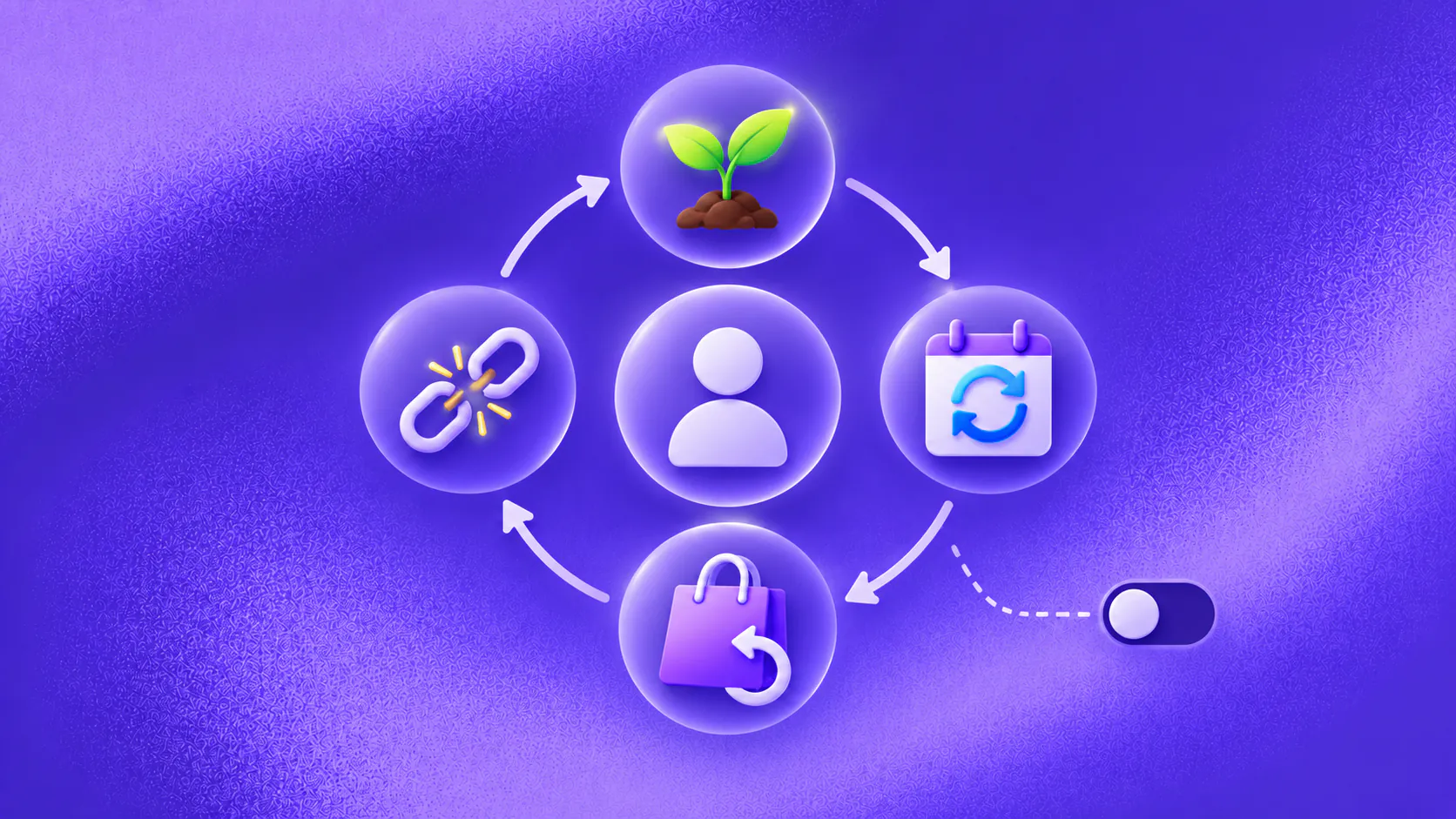
A customer retention chatbot supports permitted onboarding, renewal, repeat-purchase, feedback and win-back conversations with existing customers. It uses known context to offer a relevant next step, records the response and routes exceptions without treating every inactive customer as the same.
Key takeaways
- Retention starts with a useful reason to contact an existing customer, not a generic promotion sent to every record.
- Onboarding, renewal, replenishment, feedback and win-back require different timing, context and next steps.
- Consent, suppression rules, message frequency and clear opt-outs remain essential for proactive conversations.
- Measure the customer action and unresolved need rather than counting messages sent or replies alone.
What does a customer retention chatbot do?
A customer retention chatbot helps a business continue useful conversations after the initial sale, booking or sign-up. It can support onboarding, renewal, repeat purchase, feedback, re-engagement and win-back when the contact is appropriate and permitted.
Retention is not the same as sending the same offer to everyone in a database. The conversation should reflect a real customer moment. Someone who has not completed onboarding needs a different message from a customer approaching renewal or a shopper whose usual product is available again.
Imagine an illustrative customer who completed a purchase but did not finish the setup required to receive value. A useful conversation identifies the unfinished step, answers the relevant question and offers help. A generic discount would ignore the actual reason the relationship is at risk.
Related must-read articles
- What is a chatbot?
- Chatbot examples for sales and service
- Customer service chatbot guide
- Lead generation chatbot guide
- Conversational AI for customer retention
Where does customer retention break down?
Customers rarely describe themselves as “at risk.” They simply stop progressing, miss a renewal, abandon a repeat order or leave after a poor experience. The business often sees the signal but fails to start a relevant conversation in time.
Onboarding stops before value appears
A customer buys or signs up but misses an activation, setup or education step. Without context, the team may send broad reminders that do not address the blockage. The customer retention chatbot should recognize the incomplete stage and offer the specific next action or a person who can help.
Renewal arrives as an administrative surprise
A renewal reminder that only states a deadline can create confusion. Customers may need to understand what continues, what information is required or how to discuss an exception. The conversation should make the decision easier without pressuring the customer or concealing terms.
Repeat purchase timing is wrong
The business contacts customers too often, too late or with irrelevant offers. Useful timing should come from an observable customer or service event and remain within consent and channel rules.
A complaint closes without relationship recovery
Resolving a ticket does not necessarily restore confidence. When appropriate, follow-up should confirm that the requested action occurred, invite feedback and route any remaining concern to an accountable person.
Which retention journeys can a chatbot support?
Choose journeys where the customer has a clear reason to continue the conversation.
Onboarding and education
A customer retention chatbot can identify an incomplete step, explain approved instructions and offer the correct resource. If the customer is blocked by an account, payment or technical exception, it should create an owned route instead of repeating the same instruction.
The customer follow-up use case can support a defined sequence without turning every conversation into an identical campaign.
Renewal and service continuation
The conversation can share a permitted reminder, collect the customer’s stated intent and direct them to renewal, cancellation or human review. Consequential changes, negotiation and advice remain with an authorized person.
Repeat purchase and replenishment
For suitable products or services, the chatbot can answer availability questions, help the customer find the relevant option and continue towards checkout or a staff-assisted order. It should not infer sensitive needs or claim that an option is suitable without an approved basis.
Feedback and complaint recovery
After a completed interaction, the customer retention chatbot can ask whether the issue was resolved, collect structured feedback and reopen the matter when the answer shows that work remains. The goal is not a positive rating at any cost; it is a truthful understanding of the outcome.
Re-engagement and win-back
The conversation can reach an eligible first-party audience with a relevant reason to return, such as unfinished onboarding, an available service, a renewal opportunity or a permitted promotion. It should recognize replies such as “not now,” “stop,” “I already completed this” and “I need help.”
How should you segment existing customers?
Segmentation should describe a legitimate business context, not make hidden judgments about a person. Useful groups may include customers with incomplete onboarding, an approaching renewal, a known service milestone, an unresolved complaint or a lapsed repeat-purchase pattern.
Before a customer retention chatbot contacts a group, verify:
- The business has an appropriate first-party relationship
- The intended message is covered by consent and channel rules
- Completed, suppressed and opted-out contacts are excluded
- The reason for contact is accurate and current
- The customer can change preference or stop messages easily
- Replies have an accountable owner
The campaigns and segments capability provides product context for permitted first-party outreach. It does not mean running or optimizing paid advertising campaigns.
How should the conversation respond to customer intent?
Retention improves when the next step changes according to the reply. A renewal reminder should not continue sending “renew now” after the customer asks a billing question. A win-back offer should stop when someone opts out. A feedback request should open a service route when the customer says the issue remains unresolved.
Design explicit paths for:
- Ready to continue
- Needs more information
- Wants a different option
- Requests a delay
- Reports a problem
- Has already completed the action
- Wants a person
- Does not want further messages
A customer retention chatbot should record those outcomes so later messages respect the customer’s current state.
What role does human involvement play?
Automation can recognize a bounded situation and continue an approved path. A person should step in for negotiation, complaints requiring judgment, sensitive circumstances, consequential account changes, disputed information or any request outside the configured authority.
The human handoff layer should pass the reason for contact, relevant customer context, replies already given and the requested outcome. The customer should not have to repeat the whole history.
How do you prevent retention outreach from becoming spam?
Frequency and relevance are operating controls, not copywriting details. A customer retention chatbot should use approved audiences, suppression lists, channel-compliant timing and clear opt-outs. It should not keep contacting a customer simply because the previous message received no reply.
Set rules for:
- Maximum contact frequency by journey
- Quiet periods and appropriate local timing
- Exclusion after purchase, renewal or resolution
- Immediate opt-out processing
- Campaign conflicts across teams
- Stale or unreliable customer information
- Review of complaints, blocks and message failures
For channel-specific outreach, verify current rules before launch. What is allowed on email, WhatsApp, Instagram or another channel can differ and can change.
How should you measure customer retention conversations?
Do not evaluate the customer retention chatbot only by delivery or reply rate. Those figures describe message activity, not the customer outcome.
Match the measure to the journey:
| Journey | Useful outcome | Warning sign |
|---|---|---|
| Onboarding | Required step completed | Repeated reminder with no progress |
| Renewal | Renewal decision recorded | Deadline passes without an owner |
| Repeat purchase | Appropriate next order completed | Irrelevant offer or duplicate contact |
| Complaint recovery | Customer confirms resolution | Ticket closes while concern remains |
| Win-back | Customer returns or states a preference | No response triggers repeated outreach |
Also review opt-outs, complaints, failed actions, handoff delay and incorrect segmentation. The analytics layer should help teams connect conversations to the workflow state they can actually observe.
How do you choose the first retention use case?
Start where the business can explain why customers stop and can observe the next step. An incomplete onboarding stage is often easier to improve than a broad “win back everyone” campaign. A renewal journey can be suitable when dates, status and ownership are reliable. Complaint recovery can work when service teams can act on the feedback.
Ask five questions:
- What customer moment are we addressing?
- Why would the customer value this message?
- What reply or action changes the next step?
- Who owns exceptions and negative feedback?
- What observable outcome will show that the journey worked?
The best first customer retention chatbot use case is not the largest audience. It is the journey where context, permission, action and ownership are clearest.
What should a retention plan include?
A practical plan documents the trigger, eligible audience, exclusions, customer value, answer sources, possible actions, handoff owner, stopping rules and measurement. Review the plan with marketing, service, operations and the relevant privacy or compliance owner.
The customer retention chatbot should then be tested with outdated status, duplicate records, unexpected replies, opt-outs and failed connected actions. Expand only when the team can operate those exceptions consistently.
Additional resources
- Campaigns and broadcasts
- Customer win-back and re-engagement
- Feedback and CSAT
- Customer service
- Omnichannel inbox
- Book a ZINQ demo
Frequently asked questions
What is a customer retention chatbot?
A customer retention chatbot supports relevant conversations with existing customers across onboarding, renewal, repeat purchase, feedback, re-engagement and win-back journeys.
Can a retention chatbot message every inactive customer?
No. Outreach should use an appropriate, consented audience and follow current channel, legal, frequency and suppression requirements. Inactivity alone does not create permission to contact someone.
How is retention different from customer support?
Support usually begins with a customer problem or request. Retention includes the wider relationship, such as successful onboarding, timely renewal, repeat value, feedback, re-engagement and recovery after a poor experience.
Conclusion
A customer retention chatbot is most useful when it recognizes a real moment in the customer relationship and helps that person reach a relevant next step. Responsible targeting, clear ownership and observable outcomes matter more than sending more messages.
READY TO SEE ZINQ IN ACTION?
From first enquiry to conversion, follow-up and support, ZINQ helps automate the next step while keeping your team in control.
Book a DemoAdditional resources
-
What Is a Chatbot? Business Uses and Examples
A chatbot is software that holds a text or voice conversation with a person. Businesses use one to answer common questions, collect information, guide a customer through a defined task and bring in a person when the request needs judgment.
The ZINQ team · October 30, 2026 · Comparisons & Guides -
Chatbot Examples for Sales and Customer Service
Useful chatbot examples solve a defined customer task, such as qualifying an enquiry, finding a suitable product, requesting an appointment, checking an order or preparing a support handoff. The strongest examples end with a visible outcome rather than an automated reply alone.
The ZINQ team · October 30, 2026 · Comparisons & Guides -
Customer Service Chatbot: Use Cases, Benefits and Handoffs
A customer service chatbot can improve support by answering routine questions, collecting issue details, retrieving authorised status information and routing exceptions with context. It becomes a dead end when it blocks human help, uses outdated information or claims an action succeeded without confirmation.
The ZINQ team · October 30, 2026 · Customer Support & CX