Can an AI Voice Appointment Setter Book Reliably?
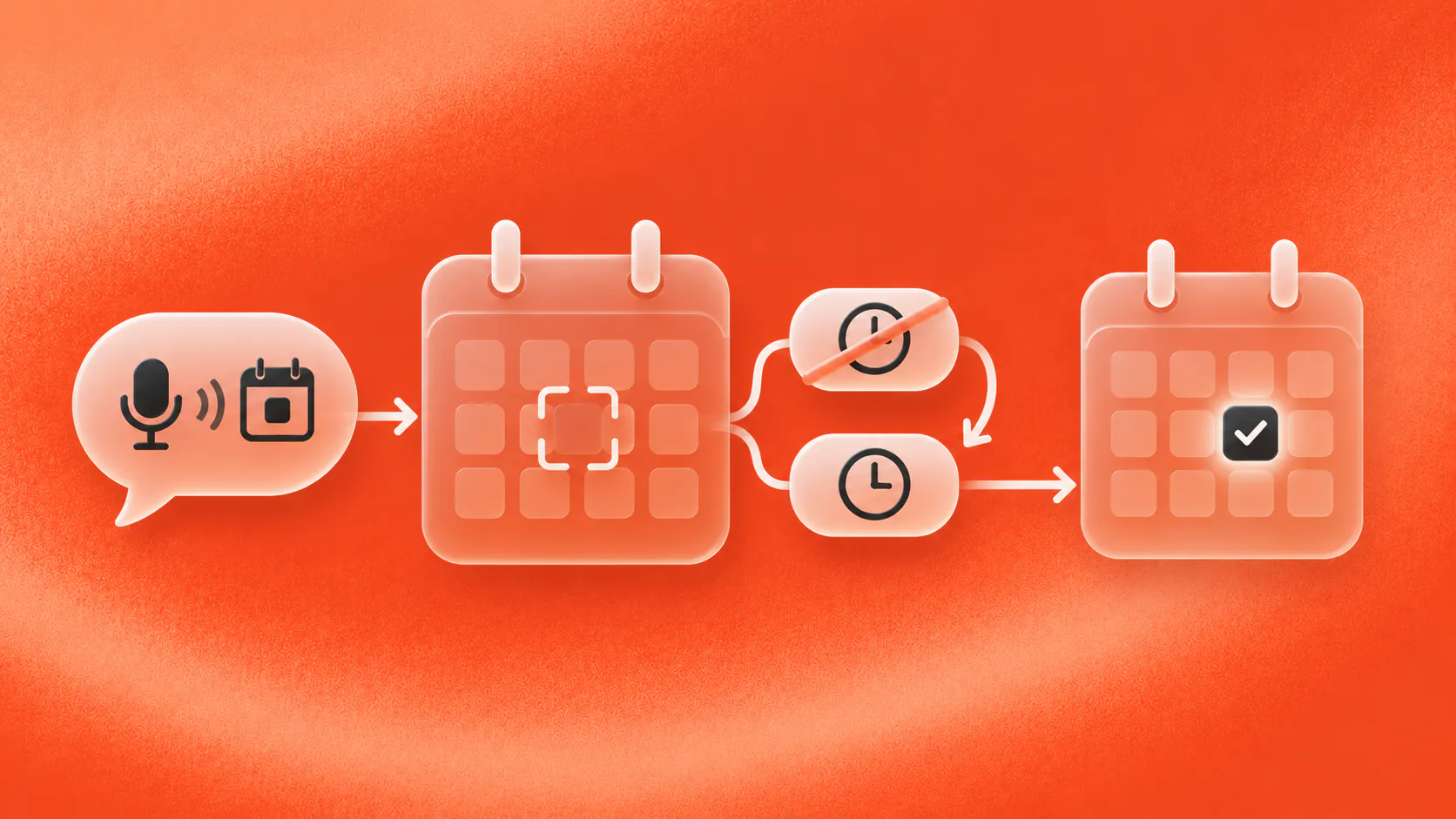
An AI voice appointment setter can book reliably only when it uses current availability, preserves spoken corrections, follows booking rules and waits for the scheduling system to confirm the appointment.
Key takeaways
- A requested time is not a booked appointment until the scheduling system confirms it.
- Spoken dates, names and numbers require read-back and correction handling.
- Booking rules must cover service, location, duration, availability and eligibility.
- Failed actions need an honest pending state and accountable recovery path.
Can an AI voice appointment setter book reliably?
An AI voice appointment setter can book reliably when it reads current availability, follows configured booking rules, handles corrections and receives confirmation from the scheduling system. A natural conversation does not prove that the appointment exists.
The customer’s definition of success is specific: the right service, person or location at the right date and time, recorded in the responsible calendar. Anything less is a request or pending action.
The Appointment Booking use case explains the wider journey. Read what an AI voice agent is for the category foundation and the ZINQ Voice channel for product scope.
Related reading
- What is an AI receptionist?
- How conversational AI works
- Where people remain in control
- AI-agent guardrails for customer conversations
- How to implement conversational AI
Reliability begins before the call
The organisation must define which appointments can be booked, required details, duration, location, eligibility, preparation, buffers, cancellation rules and exception ownership. If staff rely on undocumented workarounds, the workflow is not ready.
An AI voice appointment setter needs access only to the information and actions required for the task. The knowledge layer can supply approved pre-booking answers; the workflow layer connects the conversation to scheduling.
Follow one booking from request to confirmation
Consider an illustrative call to a service business. The caller asks for Tuesday afternoon at the nearest location.
First, the system identifies the requested service and location. It asks only for the configured information needed to choose the right booking path. If professional judgment is required to determine suitability, a qualified person takes over.
Next, the scheduling system returns available slots. The agent offers two rather than inventing a time. The caller says “three fifteen,” pauses, then corrects it to “four fifteen.” The current selection must change while the service and location remain intact.
The workflow submits the choice. When the scheduling system returns success, the agent reads back the service, location, full date and time. The appointment is now confirmed.
Why spoken details need special handling
Phone audio makes dates, names, addresses and numbers easy to mishear. “Fifteen” and “fifty,” similar surnames and relative dates such as “next Friday” need explicit treatment.
The voice-booking workflow should:
- Ask a focused clarification when confidence is insufficient;
- Read back high-impact details before submission;
- Resolve relative dates to a full date;
- Preserve a caller’s correction;
- Avoid collecting unnecessary sensitive information;
- Offer a person when repeated clarification is failing.
The objective is not to keep the call automated. It is to prevent a wrong booking and customer rework.
What if the requested slot disappears?
Availability can change between display and submission. Treat the scheduling system’s response as authoritative. If the slot is no longer available, explain that clearly and offer newly returned options.
Do not silently move the customer to another time. Do not claim success while retrying in the background. A booking has a clear state: proposed, submitted, confirmed, failed or pending human review.
Can it reschedule or cancel?
Voice automation may support changes when the system can identify the appointment appropriately and the configured policy permits the action. The workflow should confirm the current booking, proposed change, fees or restrictions from approved information and final system result.
Exceptions—such as a late change requiring discretion—go through human handoff. The employee should receive the caller’s goal, verified appointment, options discussed and action attempted.
What happens when the calendar fails?
If the connection times out or returns an error, the appointment is not confirmed. The system can preserve the preferred options, create an owned follow-up or transfer the call. It should tell the caller what is known and what remains pending.
An AI voice appointment setter that hides failure creates duplicate bookings, missed expectations and manual cleanup. Honest recovery is part of reliability.
Where should people remain responsible?
People handle calls involving professional judgment, disputed identity, policy exceptions, unusual resource needs, complaints, safeguarding or repeated technical failure. The caller can also ask for a person.
For clinical appointments, the system may handle approved administrative booking steps; diagnosis, treatment advice and clinical triage remain with qualified professionals.
What should you test?
Use test cases built from actual booking work, with personal data protected:
- Clear availability and successful confirmation.
- A spoken correction to date or time.
- Similar names and noisy audio.
- Relative dates across month or year boundaries.
- A slot that disappears before submission.
- A calendar timeout or duplicate response.
- Rescheduling with a policy exception.
- Identity that cannot be established.
- A question outside approved knowledge.
- A direct request for a person.
Run cases repeatedly and inspect both the conversation and calendar result.
How should reliability be measured?
Use available analytics and system-of-record data to distinguish confirmed bookings, failed submissions, pending requests, corrections, transfers and later manual repair. A “completed call” is not the same as a correct appointment.
Review whether the customer received an accurate confirmation, whether staff had to fix details and whether failed actions reached an owner. Expand the AI voice appointment setter only when ordinary bookings and failure paths are both accountable.
Frequently asked questions
Can an AI voice appointment setter book appointments?
It can when a configured scheduling connection supplies current availability and confirms the final action. Capability depends on the implementation and booking rules.
How should voice AI confirm a booking?
It should wait for a successful system response, then read back the service, location, date and time and provide the approved confirmation path.
Can a voice agent reschedule appointments?
It can support configured rescheduling when identity, change rules and available slots are appropriately connected. Exceptions need a person.
What happens when the calendar fails?
The system should say the appointment is not confirmed, preserve the preferred options and create an owned follow-up or transfer the caller.
Conclusion
Reliable voice booking depends on verified availability, correction handling, system confirmation and recovery—not on how natural the voice sounds.
READY TO SEE ZINQ IN ACTION?
From first enquiry to conversion, follow-up and support, ZINQ helps automate the next step while keeping your team in control.
Book a DemoAdditional resources
What Is an AI Receptionist?
An AI receptionist handles suitable first-contact conversations by answering approved questions, collecting intent, coordinating configured bookings or requests and passing exceptions to the right person with useful context.
The ZINQ team·November 19, 2026·AI Agents & Conversational AIHuman-in-the-loop AI agents: where people should stay in control
Human-in-the-loop AI agents keep people involved when a customer request needs judgment, authority, empathy, sensitive information review or a decision the agent is not allowed to make.
The ZINQ team·September 30, 2026·AI Agents & Conversational AIAI agent guardrails for customer conversations
AI agent guardrails define what an agent may answer, ask, change, promise, escalate and log so customer conversations stay useful without letting automation exceed its authority.
The ZINQ team·September 30, 2026·AI Agents & Conversational AI