AI Virtual Assistant: Use Cases and Business Value
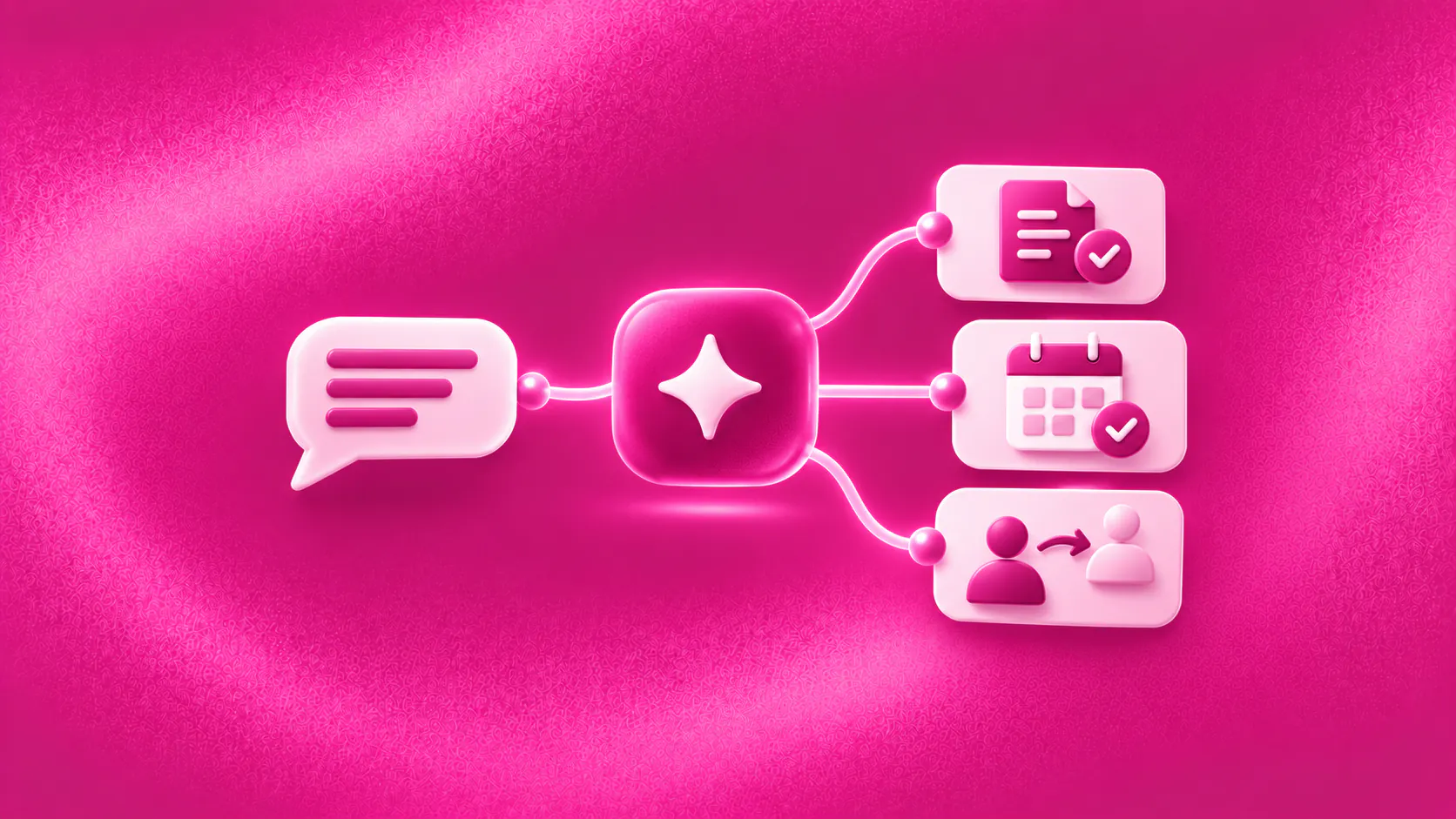
An AI virtual assistant helps customers or teams complete defined tasks through conversation. In customer operations, it can answer approved questions, collect details, progress a booking or request, follow up and pass exceptions to a person when connected knowledge, systems and permissions support the journey.
Key takeaways
- Judge an assistant by the customer task it completes, not how human its reply sounds.
- Useful assistants combine approved knowledge, conversation context and controlled actions.
- Start with one frequent journey that has a clear outcome and manageable exceptions.
- Keep people responsible for judgment, sensitive decisions, exceptions and failed actions.
What is an AI virtual assistant?
An AI virtual assistant is conversational software that helps a customer or employee complete a defined task. It interprets everyday language, uses approved information, collects relevant details and may initiate a connected action within its permissions.
The word “assistant” should describe useful work, not a personality. If a prospect asks for a suitable service and an available time, the assistant should help them understand the options, gather what the booking requires and confirm the next step. A friendly reply without progress adds little value.
Related must-read articles
Where can an AI virtual assistant create business value?
Capture and qualify an enquiry
An assistant can respond while the prospect’s interest is active, answer approved questions and collect the details that determine the right next step. Qualification should make the journey easier for the prospect, not create a long interrogation.
Help a customer choose
When several products or services appear similar, the assistant can ask about the customer’s stated need and explain relevant differences from maintained information. It should not invent suitability or hide uncertainty.
Progress a booking, demo or checkout
The assistant may collect the required information, offer configured options and send the request to a connected system. Completion should be confirmed by the calendar, commerce platform or other responsible system.
Recover an incomplete journey
With the appropriate consent and channel rules, the assistant can follow up with a contact already held by the business, answer the question that blocked progress and offer a clear way to continue or opt out.
Handle routine service work
The assistant can answer approved questions, retrieve permitted status information, collect a change or cancellation request and create work for the responsible team. The design should distinguish an answer, a submitted request and a completed action.
AI virtual assistant, chatbot or AI agent?
| Term | What it usually emphasises | Buying question |
|---|---|---|
| Chatbot | The conversational interface | Can customers ask and receive useful answers? |
| AI virtual assistant | Task support through conversation | Can it help complete the customer’s goal? |
| AI agent | Greater ability to plan or perform actions | What actions can it take, under which limits? |
These labels are not regulated product categories. A “virtual assistant” may be a simple FAQ bot, while a “chatbot” may complete connected workflows. Evaluate the actual journey, controls and evidence behind the name.
What does a conversational AI assistant need behind it?
A useful conversational AI assistant needs more than a language model. It needs maintained knowledge, instructions, the current conversation, relevant integrations, action limits, logs and named owners.
For example, rescheduling requires the correct booking, permitted change rules, available times and confirmation from the calendar. Without those parts, the assistant can explain the process but cannot truthfully claim the change is complete.
Keep the technical review connected to a customer outcome. Each component exists to answer a practical question: can the customer trust the answer, can the action happen and who owns the exception?
How should a business choose the first use case?
Look for a frequent journey with a clear result, stable information and manageable consequences when something goes wrong. Review real anonymised enquiries to understand the language customers use and where the current process stalls.
Good first-use-case questions include:
- Can completion be defined clearly?
- Is the required information approved and current?
- Can the responsible system confirm the outcome?
- Are exceptions recognisable?
- Is there a real team owner?
An AI virtual assistant should begin with a bounded responsibility and earn a broader role through reviewed performance.
What should you measure?
Measure whether the customer completed the intended next step. Depending on the journey, that may include captured enquiries, qualified appointments, confirmed bookings, completed requests, unresolved questions, failed actions, repeat contacts and handoffs reaching the correct owner.
Reply speed and conversation volume are useful context, but they do not prove business value. A fast answer that leaves the customer to start again has not completed the work.
When should a person step in?
A person should take ownership when the customer asks, identity or authority is uncertain, the request needs judgment, negotiation or empathy, a professional decision is involved, or a required system fails.
The assistant should pass the customer’s goal, relevant verified context, completed steps and the next required action. Human handoff is the final use case that keeps the broader journey dependable.
Additional resources
Frequently asked questions
What is an AI virtual assistant?
An AI virtual assistant is conversational software that understands requests and helps complete defined tasks using approved knowledge, instructions and, where configured, connected systems.
Is an AI virtual assistant the same as a chatbot?
The terms overlap. Chatbot often describes the conversation interface, while virtual assistant usually implies broader task support, context and actions. Actual capability depends on the implementation.
What can a conversational AI assistant do for a business?
It may answer approved questions, capture and qualify enquiries, support booking or checkout, provide status, collect service requests and prepare contextual handoff.
Conclusion
An AI virtual assistant creates value when it completes a bounded customer task reliably and makes its limits and human ownership clear.
READY TO SEE ZINQ IN ACTION?
See how ZINQ combines conversations, knowledge, actions and accountable handoff.
Book a DemoAdditional resources
-
What Is an AI Chatbot?
An AI chatbot is software that understands everyday language and responds through a customer conversation. For a business, it can answer approved questions, collect details, qualify an enquiry, complete a connected action and pass an exception to the right person.
The ZINQ team · October 23, 2026 · AI Chatbots -
AI Chatbot Examples and Practical Use Cases
Useful chatbot examples show a customer reaching an observable next step: a qualified enquiry, suitable option, confirmed booking, completed checkout, current status answer or well-prepared handoff. The best use case is frequent, bounded and connected to a result the business can verify.
The ZINQ team · October 22, 2026 · AI Chatbots -
AI Chatbot vs AI Agent: Which Does Your Business Need?
An AI chatbot primarily manages a conversation, while an AI agent is generally expected to pursue a goal and take bounded actions through connected tools. The labels overlap, so businesses should compare the journey completed, authority granted, confirmation method and human ownership.
The ZINQ team · June 17, 2026 · AI Chatbots