Real Estate Chatbot for Property Enquiries and Viewings
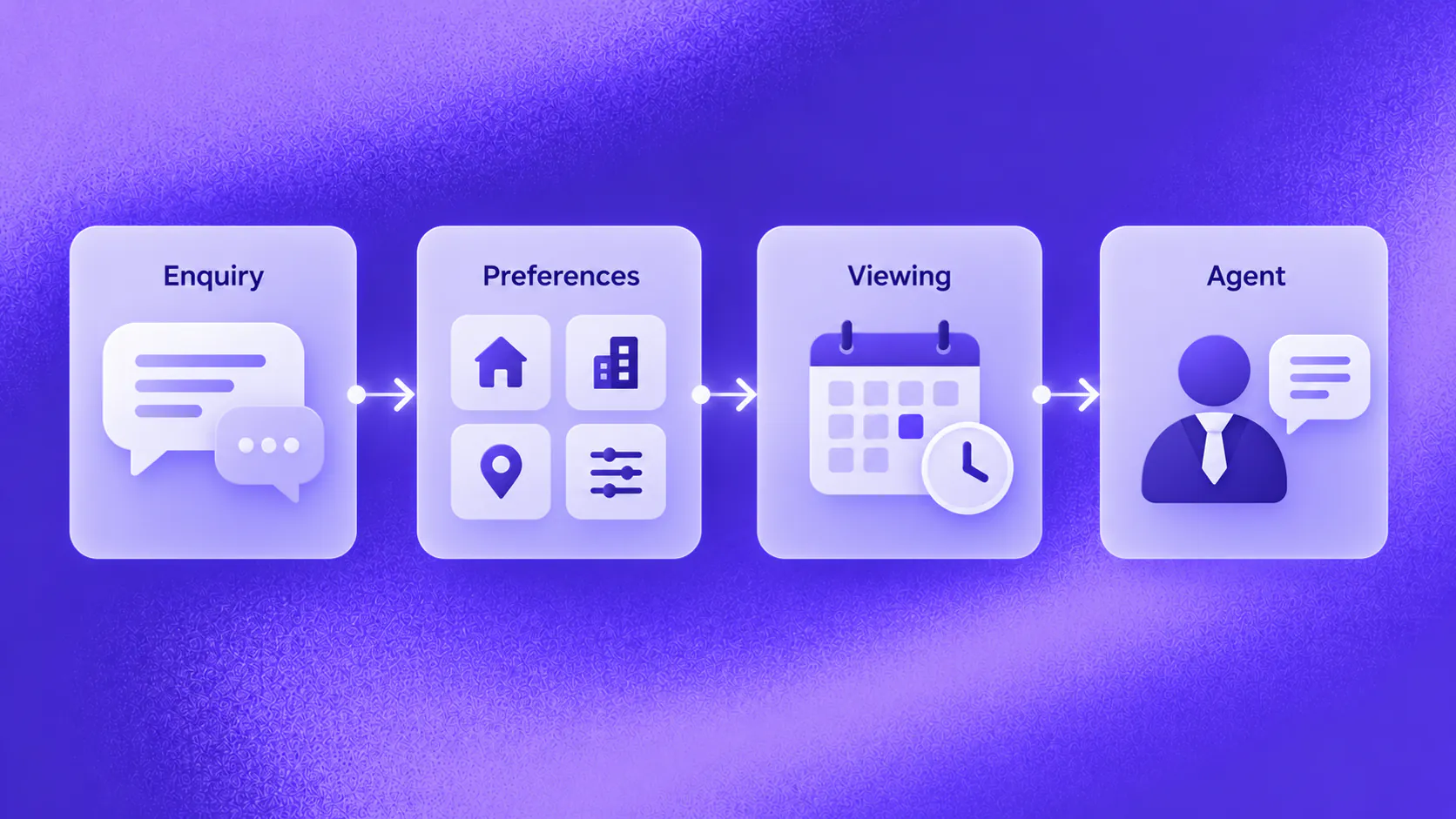
A real estate chatbot can respond to property enquiries, collect stated requirements, surface suitable available options and support viewing bookings and follow-up. It should use verified listing and calendar information while leaving valuation, financing, legal interpretation, negotiation and approval to responsible people.
Key takeaways
- Respond while property interest is active and preserve the listing or source context where available.
- Ask only for requirements that affect suitable options, routing or the next step.
- Use verified availability, price and viewing information from responsible systems.
- Keep valuation, financing, legal interpretation, negotiation and approval with appropriate people.
What does a real estate chatbot do with a property enquiry?
A real estate chatbot can respond when a buyer, tenant, seller or landlord contacts the business. It can preserve the property or source context, answer approved questions, collect requirements and move an appropriate enquiry towards a viewing or responsible agent.
Consider an illustrative tenant asking whether a listed property is still available and whether pets are permitted. A useful conversation retrieves current approved information, asks about move-in timing and offers an eligible viewing. It does not approve the applicant, interpret a lease or negotiate terms.
The business value comes from reducing the delay and repetition between first interest and the next meaningful step. The conversation should not treat every property message as a qualified lead before understanding what the person wants.
Related must-read articles
- What is a chatbot?
- Lead generation chatbot guide
- Appointment booking chatbot guide
- Conversational AI in real estate
- Real estate AI agent guide
Why do property enquiries lose momentum?
Interest in a listing is time-sensitive. A prospect may contact several agencies, especially outside working hours. When the response arrives late or begins by asking for information already present in the enquiry, the conversation can lose momentum.
Common problems include:
- Slow replies to portal, website or social enquiries
- Missing budget, location, property type or timing details
- Questions about properties that are no longer available
- No suitable alternative when the original listing is unavailable
- Repeated messages needed to arrange a viewing
- Enquiries routed to the wrong agent or team
- Inconsistent viewing confirmations and reminders
- Follow-up depending on an individual agent’s memory
A real estate chatbot can support these moments only when listing, availability and team ownership are reliable.
How should the chatbot qualify a buyer or tenant?
Ask for requirements that change the options or next step. Depending on the journey, that may include:
- Preferred area
- Budget range
- Property type
- Number of bedrooms or space requirement
- Purchase or rental intent
- Move-in or purchase timeline
- Intended property use where appropriate
- Preferred viewing time
The real estate chatbot should let the prospect explain priorities naturally and should not use protected characteristics or discriminatory profiling. Qualification exists to improve relevance and routing, not to make an approval decision.
The lead qualification use case provides the operating context for collecting only decision-useful information.
How can it help with property discovery?
When verified listings are connected, the conversation can narrow available options based on the prospect’s stated requirements. It should explain why a property appears and let the person adjust the criteria.
If the original listing is unavailable, the real estate chatbot may offer approved alternatives that genuinely match the stated need. It should not advertise stale listings as available or change price information without an authoritative source.
Current availability, pricing, amenities and policies need responsible connected data. Static marketing copy should not be presented as live listing status.
How should viewing booking work?
The conversation can collect the selected property, preferred time and relevant contact details, then check supported agent or property availability. A viewing is confirmed only when the responsible calendar accepts it.
Show the correct state:
- Viewing confirmed
- Requested and awaiting agent review
- Time unavailable with alternatives offered
- Missing required information
- Failed action assigned for follow-up
The appointment booking use case helps define confirmation and recovery without leaving the prospect unsure.
What happens after the viewing?
Follow-up should reflect the prospect’s stated next step. The real estate chatbot may ask whether the person wants another property, has an administrative question or would like to speak with the agent. It should stop or change the sequence when interest changes.
For longer journeys, permitted follow-up can record:
- Interested and awaiting agent contact
- Wants another viewing
- Requirements have changed
- Not ready yet
- No longer interested
- Requests no further messages
Negotiation, offer strategy, financing, legal documentation and professional advice remain with the appropriate people.
Can it re-engage older property leads?
An eligible first-party contact may value a message when a relevant property becomes available or when the business has a legitimate reason to continue the journey. Generic broadcasts that ignore location, budget, property type and consent are unlikely to help.
Before re-engagement, verify current permission, stated preferences, suppression and opt-out status. The real estate chatbot should handle replies such as changed requirements, already found a property, not ready and stop contacting me.
Use the win-back and re-engagement use case to define the permitted journey and stopping rules.
How do seller and property-management enquiries differ?
Not every conversation is a buyer or tenant enquiry. Sellers may ask about the valuation process, marketing steps or appointment availability. Landlords may need management information. Existing tenants may report maintenance, payment or building-policy questions.
The real estate chatbot can identify the enquiry type and route it to the correct team, but it should not produce a valuation, interpret a contract or decide responsibility. Property-management requests may require an owned ticket and appropriate identity checks.
The tickets and tasks capability can support work that must remain assigned after the chat ends.
When should a person step in?
Transfer when the prospect asks, the property information is uncertain, negotiation begins, a viewing needs judgment, identity is required, a complaint arises or a connected action fails.
The agent should receive:
- The property or source context
- The prospect’s stated requirements
- Answers already provided
- Viewings or actions attempted
- Current journey status
- The requested next step
The human handoff capability should prevent the prospect from repeating the same property requirements.
What decisions must remain with people?
Keep these activities outside routine chatbot authority:
- Property valuation
- Financing or mortgage advice
- Legal interpretation
- Tenant or buyer approval
- Negotiation decisions
- Offer acceptance
- Contract commitments
- Discriminatory screening or profiling
The chatbot can collect administrative information and route the request. Responsible professionals make the consequential decision.
How do you measure real estate chatbot value?
Measure progress through the property journey:
- Enquiries receiving a relevant first answer
- Requirements captured sufficiently for routing
- Suitable current properties viewed or shared
- Viewing requests and confirmed appointments
- Unavailable listings followed by suitable alternatives
- Follow-ups with a recorded outcome
- Transfers received with usable context
- Failed calendar or listing actions
- Reasons enquiries do not progress to viewings
The analytics layer can help teams review supported stages without claiming that every message created a sale or lease.
What should you test before launch?
Test unavailable listings, changed prices, incomplete requirements, duplicate enquiries, several properties in one conversation, viewing conflicts, changed interest and a request for a person. Include buyer, tenant, seller, landlord and property-management routes where they are in scope.
The first real estate chatbot journey should remain bounded. Enquiry qualification and viewing requests are often easier to observe than end-to-end property transactions. Expand only after the team can maintain listing data, own exceptions and respect customer preferences.
How do different property journeys change the conversation?
A buyer, tenant, seller, landlord and existing property-management customer may contact the same business through the same channel. Their goals, information and responsible teams are different.
A buyer or tenant may need current listings and viewing availability. A seller may need an explanation of the appraisal or appointment process, without receiving an automated valuation. A landlord may want management-service information or a staff consultation. An existing tenant may need a maintenance request routed to the property-management team.
Define the first routing question carefully so the person does not complete an irrelevant qualification flow. Once the journey is clear, collect only the information the receiving team needs. Preserve the property or account context when appropriate and apply stronger identity checks before discussing an existing tenancy or management request.
Who should own listing and journey accuracy?
Property marketing teams may own listing descriptions, but sales, leasing and operations own availability, viewing schedules and follow-up. Set a source of truth for each field and do not allow a static description to override a current unavailable status.
Review conversations that stopped before a viewing, properties repeatedly requested after becoming unavailable and transfers that lacked usable requirements. Those records can reveal data, process or staffing gaps. The purpose is to improve the journey, not to pressure every enquiry towards an appointment.
Retest when listing feeds, office coverage, viewing rules or routing assignments change. A dependable conversation reflects the current property operation, including what the business cannot confirm automatically.
Assign one team to review expired listings and failed viewing requests each week, then correct the source information before the same problem reaches another prospect.
Additional resources
- ZINQ for real estate
- Lead qualification
- Appointment booking
- Customer follow-up
- Omnichannel inbox
- Book a ZINQ demo
Frequently asked questions
What does a real estate chatbot do?
It can answer approved property questions, collect buyer or tenant requirements, surface suitable available options, support viewing requests and route conversations to the responsible team.
Can a real estate chatbot book property viewings?
Yes, when current property and agent availability is connected and the responsible calendar confirms the appointment.
Can a chatbot value a property or approve a tenant?
No. Valuation, tenant approval, financing advice, legal interpretation and negotiation decisions remain with appropriately responsible people and verified processes.
Conclusion
A real estate chatbot should turn active property interest into a relevant, properly owned next step. Current listing data, concise qualification, viewing confirmation and contextual agent handoff matter more than collecting every possible lead detail.
READY TO SEE ZINQ IN ACTION?
From first enquiry to conversion, follow-up and support, ZINQ helps automate the next step while keeping your team in control.
Book a DemoAdditional resources
-
What Is a Chatbot? Business Uses and Examples
A chatbot is software that holds a text or voice conversation with a person. Businesses use one to answer common questions, collect information, guide a customer through a defined task and bring in a person when the request needs judgment.
The ZINQ team · October 30, 2026 · Comparisons & Guides -
Lead Generation Chatbot: Qualification and Follow-Up
A lead generation chatbot engages an inbound enquiry, answers the prospect's first question, collects the details that affect fit or routing and gives the conversation a clear next step. It should qualify declared intent without making hidden assumptions or forcing every prospect through a long form.
The ZINQ team · October 30, 2026 · Sales & Conversion -
Appointment Booking Chatbot: Scheduling and Confirmation
An appointment booking chatbot turns an enquiry into a confirmed slot by identifying the requested service, collecting the minimum required details, checking authorised availability and recording the booking in the connected system. If confirmation is unavailable, it should create a pending request and set an honest expectation.
The ZINQ team · October 30, 2026 · Sales & Conversion