Omnichannel AI Agent: Context, Ownership and Handoff
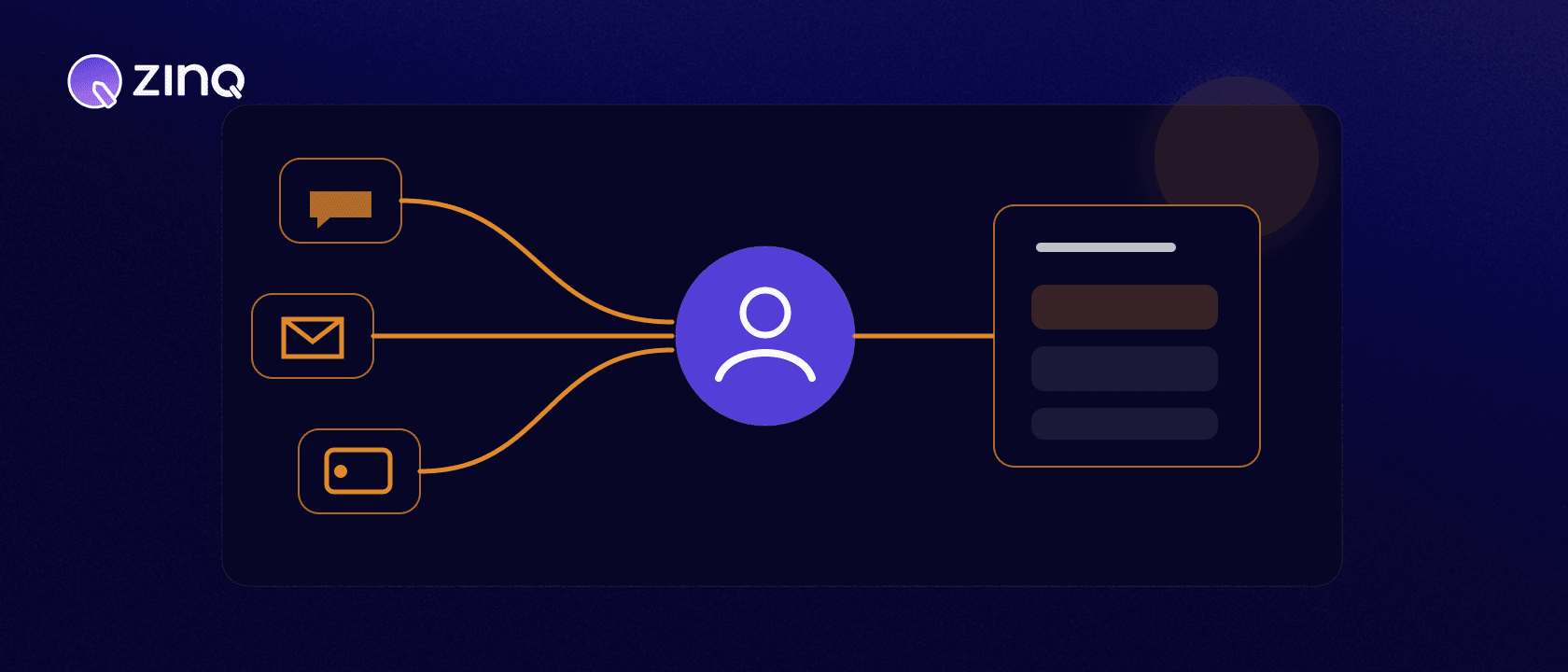
An omnichannel AI agent applies shared knowledge, workflow rules and ownership across connected customer channels while respecting the identity, consent and technical limits of each channel.
Key takeaways
- Omnichannel means shared operating rules, not identical behavior on every channel.
- Customer identity should carry across channels only when the association is supported and trustworthy.
- Every channel switch needs an owner, a reason and a visible next step.
- Measure the customer outcome across the journey instead of counting each channel thread as separate work.
What changes when an agent becomes omnichannel?
The agent stops treating each inbox as the whole customer story. It can use shared business knowledge and workflow rules across connected channels, while the team can see available context and ownership in one operational view.
That does not mean copying the same response everywhere. WhatsApp, web chat, Instagram, Telegram and email have different identity signals, message formats, timing expectations and platform rules. The operating core can be shared; the delivery layer must respect the channel.
Build a shared core and channel adapters
Keep these decisions common where the configuration supports it:
- approved knowledge and source priority;
- intent and workflow definitions;
- action permissions;
- customer-data rules;
- handoff reasons and ownership; and
- outcome definitions.
Then define the channel-specific layer: how the conversation starts, which identity information is available, what message types are allowed, how long a session persists and where the customer expects the reply.
This model avoids two bad extremes. Separate agents for every channel create inconsistent policy. One undifferentiated agent ignores real channel constraints.
Treat identity as a confidence decision
A phone number, email address, social handle and browser session may belong to one person, but similarity is not proof. Associate conversations only when the supported configuration provides a trustworthy link or the customer confirms it.
When confidence is low, keep the records separate and ask for the minimum information needed. A mistaken merge can expose the wrong history or cause a team member to act on someone else’s context.
ZINQ Contacts & CRM can keep supported customer profiles, conversation history, custom fields and segments associated where the configuration allows. It does not make every identity match certain.
Define a channel-switch contract
A switch is not complete because the agent sent an email or asked the customer to open WhatsApp. Define five things:
- Reason: why the new channel is better for this step.
- Consent: whether the customer agreed to continue there.
- Context: what information follows the conversation.
- Owner: which agent, person or queue is responsible next.
- Confirmation: how the customer knows the switch succeeded.
Consider a hypothetical customer who begins in WhatsApp, needs to send a detailed document and chooses email. The agent records the purpose, creates an owned task, sends the supported continuation message and tells the customer what address or thread to expect. The email owner receives the existing question and the reason for the switch. If the email action fails, the WhatsApp conversation remains open with a recovery path.
Without that contract, a channel switch becomes a polite way to lose work.
Keep ownership visible
The customer should not have to infer whether AI or a person is responding, and the team should not have to guess who owns the next step. Use a shared queue with an explicit state such as agent handling, awaiting customer, awaiting system, assigned to team or complete.
ZINQ Omnichannel Inbox provides a shared workspace for supported conversations, assignment and AI- or human-handled interactions with available context. Human handoff should be a designed state, not an untracked escape from automation.
Apply consent and timing by channel
A customer’s permission to receive one kind of message in one channel does not automatically authorize every future message everywhere. Store the relevant preference and purpose, and apply the current channel’s rules before sending proactive communication.
Also account for timing. Web chat often expects an immediate session. Email supports longer exchanges. Messaging channels may have platform-defined conversation windows or templates. Confirm current platform requirements rather than encoding assumptions that will age quietly.
Use one journey state model
Channel threads are delivery records. The customer journey needs a separate state that explains what is happening now. A compact model might use: new, understanding intent, awaiting customer, awaiting system, agent handling, assigned to human, completed and closed without completion.
Each transition should have a timestamp, reason and owner. If a WhatsApp conversation is awaiting a document by email, the journey should not appear completed in WhatsApp and new in email. It is one request awaiting customer input through a different channel.
Keep channel status too. A message can fail to send while the journey remains assigned. This distinction helps the team recover the delivery problem without losing the customer’s place in the workflow.
Resolve simultaneous conversations deliberately
Customers sometimes contact the business in two places before either reply arrives. The system needs a concurrency rule. It may link the threads to one journey, keep both visible and nominate one as the active response channel. It should not silently close one conversation or send conflicting instructions from both.
When identity is uncertain, show the possible relationship to a person rather than merging automatically. When identity is confirmed, decide which context is safe and useful to combine. The goal is continuity, not maximum data consolidation.
Human teams also need presence and ownership signals. If a person begins replying in the shared inbox, the agent should pause or move to a supporting state according to the configured rule. Two active responders are not an omnichannel experience; they are a race condition visible to the customer.
Write the handoff packet
Standardize the context transferred at handoff:
- the customer’s stated goal;
- the channel and identity information available;
- facts the customer supplied;
- answers and sources already used;
- actions attempted and their results;
- the reason a person is needed; and
- the promised next step or response channel.
Keep the summary factual. Do not turn a model-generated interpretation into a confirmed customer attribute. The receiving person should be able to open the original thread when nuance matters.
A good packet reduces repetition, but it also protects ownership. The destination queue can accept, redirect or return the work with a reason. An unaccepted handoff remains the responsibility of the sending workflow.
Roll out channel by channel without fragmenting policy
Start with one or two channels where the same customer journey already occurs. Define the shared knowledge, state model and outcome first. Then document the differences in identity, consent, timing, message format and available actions.
Test transfers in both directions. A web-chat-to-WhatsApp continuation may behave differently from WhatsApp-to-web because the second web session may not carry a stable identity. Include failed sends, delayed replies and a customer who continues in the original channel after agreeing to switch.
As another channel is added, reuse the operating core and add a new adapter. If a new channel forces a change to shared policy, review the change across all existing channels. This prevents a local implementation decision from quietly changing the customer experience elsewhere.
Common implementation mistakes
Avoid measuring channel availability as omnichannel maturity. Five connected inboxes can still produce five disconnected experiences. Avoid merging profiles on weak signals, copying every transcript into every system, or routing exceptions to a queue no one monitors.
Another mistake is hiding uncertainty. If the system cannot link a new message to the earlier journey, let the agent say what context it has and ask for the minimum confirmation needed. Honest continuity is better than confident use of the wrong history.
Document channel retirement as carefully as channel launch. If a connected inbox is disabled, decide what happens to open journeys, scheduled follow-ups, stored preferences and links that still invite customers there. Move ownership before access disappears. A channel can stop accepting new work while existing conversations remain visible for an approved period; make that transition explicit to the team and the customer.
Use a small incident playbook for outages. Identify the affected channels, pause automation that depends on unavailable delivery, preserve queued work without duplicating it and tell owners where recovery will appear. When service returns, reconcile messages before replaying them. Sending every queued follow-up at once can create a second customer problem after the original outage ends.
Measure the journey once
If one customer asks in web chat, continues in WhatsApp and finishes by email, three conversation counts can exaggerate the work. Measure both channel activity and the shared outcome.
Useful journey measures include the share of eligible requests completed, accepted handoffs, unresolved channel switches, repeated questions after a switch and time from first contact to an owned next step. Segment by channel to diagnose delivery problems, but keep the customer outcome as the main unit.
What to evaluate
Ask a vendor to demonstrate a channel change with incomplete identity, a failed outbound message and a human takeover. Check what context survives, who owns recovery and how the customer is informed.
An omnichannel AI agent earns its name when the operating responsibility continues even as the conversation moves.
Frequently asked questions
What is an omnichannel AI agent?
It is an AI agent that uses shared business knowledge, workflows and ownership across connected channels while adapting to each channel’s rules and available context.
Is omnichannel the same as multichannel?
Multichannel means a business is present in several channels. Omnichannel adds continuity, so supported context, ownership and the next step can carry across them.
Does one agent answer exactly the same way everywhere?
No. The policy and knowledge may be shared, but message format, timing, identity signals and permitted actions can differ by channel.
How should human handoff work across channels?
The handoff should identify the owner, preserve available context, explain why the agent escalated and tell the customer where the next response will arrive.
Conclusion
Omnichannel work succeeds when a channel change does not erase the customer’s story or the team’s responsibility. Build a shared operating core, then make channel-specific differences explicit.
READY TO SEE ZINQ IN ACTION?
From first enquiry to conversion, follow-up and support, ZINQ helps automate the next step while keeping your team in control.
Book a DemoRelated articles
-
Managing WhatsApp and web chat in one support operation
WhatsApp and web chat can share a support operation while retaining different identity, messaging and follow-up rules. Define queue ownership and supported contact association rather than assuming that every conversation automatically becomes one customer history.
Pavan · June 30, 2026 · Omnichannel -
Linking customer conversations safely across channels
Linking conversations across channels requires reliable identity evidence and appropriate access controls. A mistaken merge can reveal another customer's information, so uncertain matches need a review or verification path.
The ZINQ team · June 5, 2026 · Omnichannel -
How to set up human handover in an AI support workflow
A human handover is complete when the right person or queue receives the unresolved request with usable context. Define triggers, ownership, customer expectations and control of further automated replies before rollout.
Pavan · June 17, 2026 · Customer Support & CX