AI Customer Retention: How Chatbots Re-engage Customers
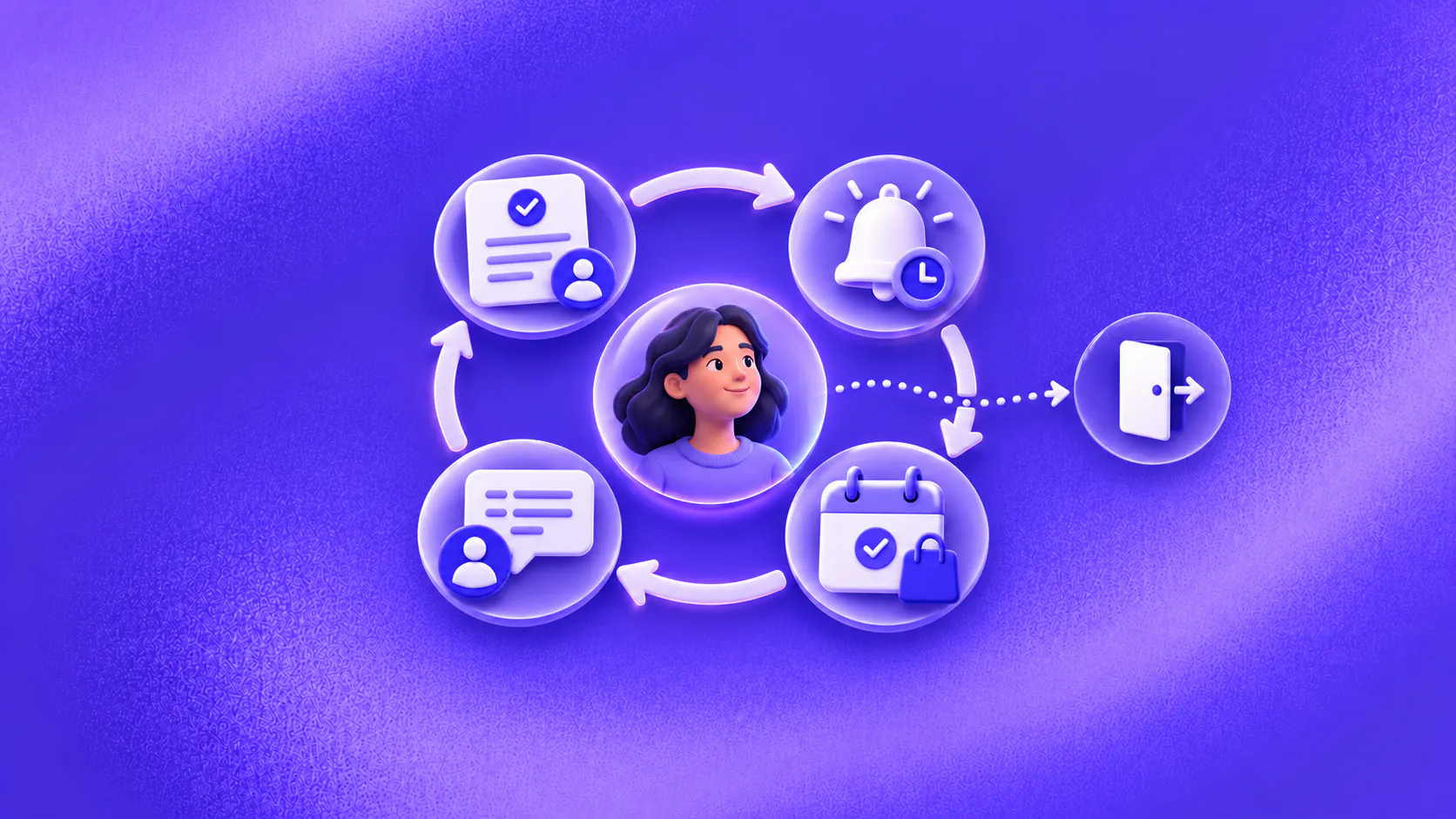
A customer retention chatbot supports permitted follow-up, onboarding, renewal, repeat purchase and win-back conversations with people the business already knows. It answers approved questions, records replies and moves each customer to a relevant next step without pretending every contact wants the same message.
Key takeaways
- Retention begins with useful customer moments, not a higher volume of promotional messages.
- Outreach requires consent, channel compliance, frequency rules and working opt-outs.
- Replies should lead to a relevant action such as help, renewal, repeat purchase or staff follow-up.
- Measure repeat activity and completed next steps alongside complaints and opt-outs.
Why do customers quietly stop returning?
Some customers leave after a visible complaint. Many simply lose momentum. They never finish onboarding, forget a renewal, cannot find the right product again or stop after a service problem remains unresolved.
An AI customer retention workflow can respond to those known moments through permitted first-party conversations. It can explain an approved next step, answer a question, collect a preference and move the customer towards help, renewal, another purchase or responsible staff.
Imagine an illustrative customer whose renewal is approaching. The reminder reaches them, but they reply with a question about what is included. A one-way notification cannot help. The assistant answers from approved information, records the reply and provides the correct renewal or staff path.
Related must-read articles
- What is an AI chatbot?
- AI chatbot examples and use cases
- AI chatbot for customer support
- Conversational AI for customer retention
- How to boost customer retention with AI support agents
Where can a retention conversation create value?
The AI customer retention strategy should be attached to a real customer event. Sending generic messages more often is not a retention strategy.
1. Help a new customer get started
Onboarding questions often arrive after the sale, when the original salesperson is no longer present. The assistant can explain approved setup steps, collect missing information and create a task when something blocks progress.
2. Continue after an incomplete journey
A customer may abandon a checkout, application or setup step because a question remains unanswered. When consent and channel rules permit follow-up, the conversation can address that question and return the customer to the correct point. It should not manufacture urgency or disguise a promotional message as support.
3. Make renewal reminders answerable
An effective reminder lets the customer ask what changes, how to continue or how to stop. An AI customer retention workflow can handle approved renewal questions and record the decision, while commercial exceptions remain with authorised staff.
4. Support repeat purchase and appropriate discovery
For a known customer, the assistant may use permitted context to help find a replacement, replenishment or relevant service. It should explain why an option fits the declared need rather than claiming personal knowledge it does not have.
5. Re-engage dormant customers carefully
Win-back starts with an appropriate first-party audience and a reason to contact them. The win-back and re-engagement use case can support approved outreach, reply handling and clear opt-out. ZINQ does not run paid advertising campaigns or infer who will purchase.
6. Recover trust after a service problem
When a complaint or unresolved request exists, a promotion can make the relationship worse. An AI customer retention workflow should recognise the open issue, give a status where available and direct the customer to resolution.
7. Bring in a person when authority or judgment matters
A person steps in for negotiation, exceptions, complaints, consequential decisions, uncertain identity or a direct request. The assistant should transfer the customer’s goal, relevant history, actions already attempted and the reason staff ownership is required.
What makes retention outreach responsible?
Retention uses customer data and proactive communication, so the operating rules matter as much as the message.
| Control | Practical question |
|---|---|
| Consent | Is this person permitted to receive this type of message on this channel? |
| Relevance | Does the customer event justify the conversation now? |
| Frequency | Could recent messages make this contact excessive? |
| Suppression | Should an open complaint, opt-out or other rule stop outreach? |
| Identity | Does the requested action require verification? |
| Ownership | Who handles a reply the automated path cannot complete? |
The campaigns and segments platform can organise permitted first-party outreach. The contacts platform and shared inbox help teams work with the customer context available to the implementation.
What should a retention programme measure?
Useful measures depend on the journey and the data the business can actually capture. They may include:
- Onboarding steps completed.
- Renewal replies and completed renewals.
- Repeat purchases or bookings.
- Incomplete journeys resumed.
- Dormant customers who reply.
- Questions that remain unresolved.
- Complaints or exceptions created.
- Delivery failures and opt-outs.
The AI customer retention programme should not be judged on delivery or reply rate alone. A high reply rate can include confusion, complaints and opt-outs. Review the conversation outcome and the customer’s observable next step.
How should you start?
Begin the AI customer retention programme with one known customer moment, a useful action and a clear permission basis. Define the audience, trigger, approved answers, completion event, opt-out behaviour and human owner. Test what happens when the customer says no, changes the subject or raises an unresolved service issue.
Use the knowledge platform for approved information and the workflow platform for the next step. Expand only after the first journey is useful, measurable and responsibly controlled.
Additional resources
- Customer win-back and re-engagement
- Campaigns and broadcasts
- Customer service automation
- Customer conversation analytics
- Human handoff
Frequently asked questions
What is a customer retention chatbot?
It is a conversational system used for permitted onboarding, reminders, renewals, re-engagement, repeat-purchase and win-back conversations with existing first-party contacts.
Can a chatbot send promotional messages?
It may support approved messages to an appropriate first-party audience when consent, channel rules, frequency controls, suppression lists and opt-out handling are in place.
Can a chatbot predict which customers will leave?
Not automatically. Predictive churn requires specific data, models and evidence. A chatbot can respond to known events and customer replies without claiming to predict behaviour.
Conclusion
Retention improves when each permitted conversation helps the customer continue, return or get help—not when the business simply sends more messages.
READY TO SEE ZINQ IN ACTION?
Continue useful customer conversations across onboarding, renewal, re-engagement and service.
Book a DemoAdditional resources
-
What Is an AI Chatbot?
An AI chatbot is software that understands everyday language and responds through a customer conversation. For a business, it can answer approved questions, collect details, qualify an enquiry, complete a connected action and pass an exception to the right person.
The ZINQ team · October 23, 2026 · AI Chatbots -
AI Chatbot Examples and Practical Use Cases
Useful chatbot examples show a customer reaching an observable next step: a qualified enquiry, suitable option, confirmed booking, completed checkout, current status answer or well-prepared handoff. The best use case is frequent, bounded and connected to a result the business can verify.
The ZINQ team · October 22, 2026 · AI Chatbots -
AI Chatbot Customer Service: Use Cases and Best Practices
A customer service chatbot handles bounded support work such as approved questions, status checks and request intake, then gives staff the context needed for exceptions. Its value comes from verified resolution and clearer ownership, not fewer human conversations alone.
The ZINQ team · October 22, 2026 · Customer Support & CX