Conversational AI for Clinics
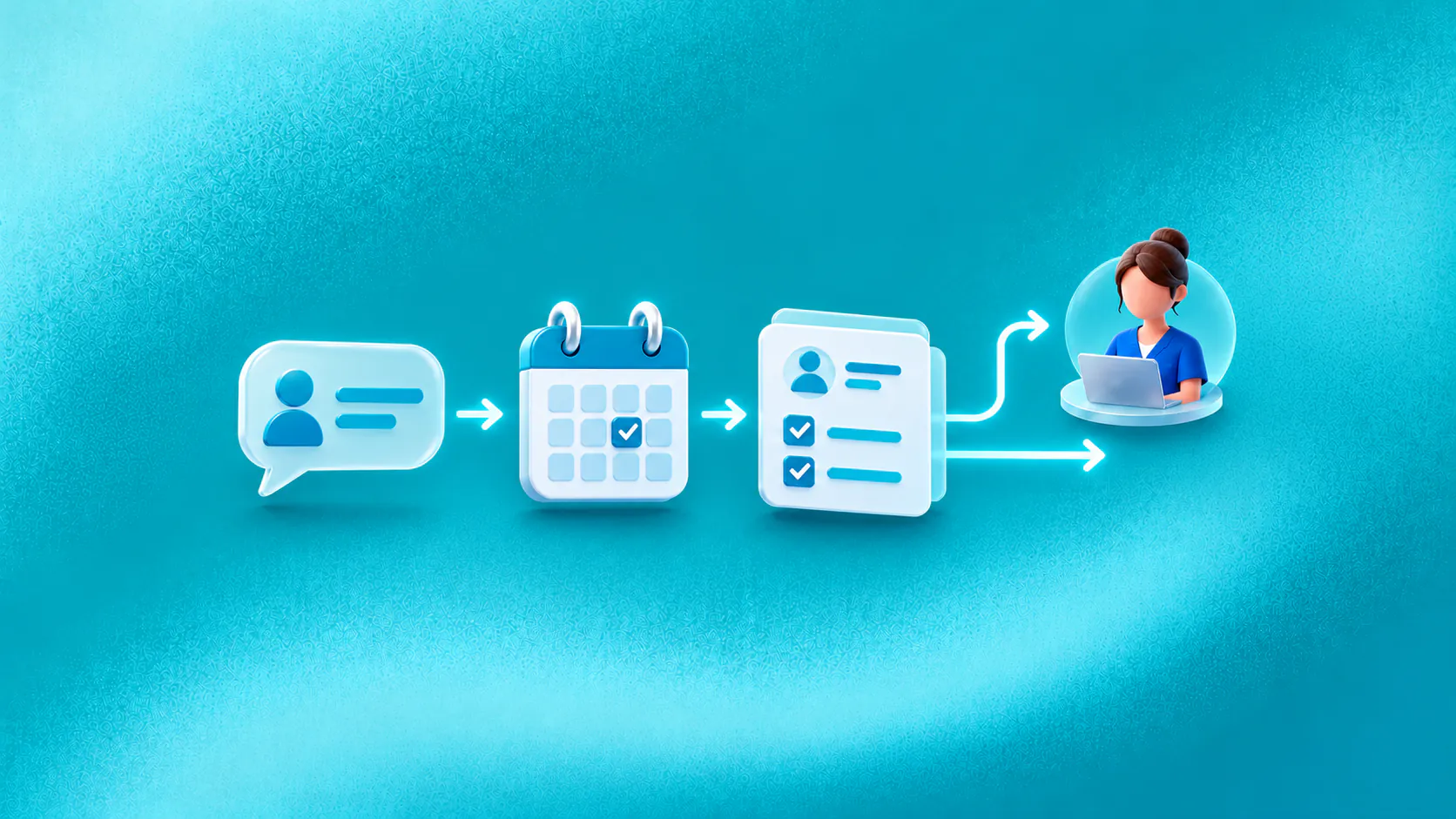
Conversational AI in clinics can support administrative communication such as enquiry handling, appointment requests, intake collection, reminders, changes and follow-up routing. It should not diagnose, recommend treatment or replace clinical judgment, and sensitive information requires appropriate governance.
Key takeaways
- Keep clinic automation focused on administrative communication and clearly separate it from clinical decision-making.
- Verify appointment actions in the scheduling system and route urgent or clinical language to staff under approved protocols.
- Collect only information needed for the administrative task and protect access, retention and consent.
- Measure confirmed bookings, corrected details, failed actions and handoff quality without claiming clinical outcomes.
What is conversational AI in clinics?
Conversational AI in clinics is software that can understand patient or prospective-patient messages and support defined administrative tasks. Those tasks may include explaining services from approved information, collecting an appointment request, sending a reminder or routing a message to clinic staff.
The appropriate scope is administrative communication. A conversational system should not be assumed to diagnose, recommend treatment, assess clinical urgency or replace professional judgment. Those activities require different evidence, oversight and governance.
This distinction should be visible to patients and staff. The interface can say what it can help with, make the limitations clear and provide an accessible route to the clinic team.
Related must-read articles
- Conversational AI for appointment booking
- How clinics automate communication with AI agents
- AI appointment booking for clinics
Which clinic workflows are suitable?
Conversational AI in clinics fits best where the clinic already has a defined process, an approved source and a named owner.
Service and location enquiries
The assistant can answer administrative questions about services offered, clinic locations, opening hours, accepted appointment types and preparation information approved by the clinic.
It should avoid turning general service information into a personalised recommendation. “The clinic offers dermatology consultations” is an administrative fact. “This is the treatment you need” is a clinical judgment.
Appointment requests
The system can collect the requested service, location, preferred time and contact details, then use a permitted scheduling workflow. It confirms the booking only after the calendar returns success.
The full appointment-booking guide covers confirmation, rescheduling and failure states. Clinics should add their own eligibility, verification and escalation rules.
Administrative intake
Conversational AI in clinics can collect information that staff need before an appointment, provided the clinic has approved the fields, purpose, access and retention.
Keep the intake proportional. Do not request sensitive history merely because the interface can ask for it. If a form or secure portal is more appropriate for a category of data, route the patient there.
Reminders and changes
Messages can confirm appointments, remind patients, provide approved preparation instructions and offer a route to reschedule or cancel. Every reminder should read the current booking state so a cancelled or moved appointment does not trigger an outdated message.
Follow-up routing
After a visit, the system can send clinic-approved administrative information, collect a request for contact or route a question to the appropriate team. It should not interpret symptoms or generate new aftercare advice.
What does a safe booking scenario look like?
Imagine a person messaging a dental clinic to request a routine consultation. The assistant explains the available appointment type using approved information, asks for the preferred location and times and checks the scheduling system.
The person chooses a slot. The system submits it and receives a booking reference before confirming. It then sends the clinic’s approved preparation note and a change link.
If the person adds a clinical question, the assistant does not answer from general model knowledge. It records the question and routes it to clinic staff according to the clinic’s process. If the message contains language covered by an urgent escalation protocol, it displays the clinic-approved instruction and routes the message without claiming to assess the condition.
That boundary is central to conversational AI in clinics: administrative progress can continue while clinical interpretation remains with qualified people.
How should urgent or clinical messages be handled?
Clinics need an approved protocol before launch. The conversational system should identify language that may require staff attention, state that the channel is not a diagnostic or emergency service and follow the exact routing or emergency-language policy approved by the clinic.
Do not improvise medical advice. Do not make reassurance the default response. Do not claim to determine severity.
The handoff should include the original message, the administrative context and the reason for escalation. Access should be limited to the appropriate team. A visible human-handoff path also lets a person ask for staff directly.
What knowledge can the assistant use?
Create an approved clinic knowledge set with clear ownership. It may include:
- Service descriptions and administrative boundaries;
- Locations, hours and contact routes;
- Appointment types and durations;
- Booking, cancellation and payment-process information;
- Clinic-approved preparation and aftercare documents;
- Escalation language and routing instructions.
Record the owner and review date of every source. Separate public administrative information from patient-specific records. The knowledge layer should not expose private information merely because a person asks a plausible question.
How should privacy and access be governed?
Patient conversations may contain sensitive information even when the clinic asks only administrative questions. Define what may be collected, where it is stored, who can access it, how identity is verified and when records are removed.
Use minimum permissions for connected systems. A booking workflow may need to see valid slots and create an appointment; it does not automatically need access to the full clinical record.
Applicable requirements vary by jurisdiction and service. Obtain privacy, security, legal and clinical review for the actual deployment. The World Health Organization’s guidance on ethics and governance of AI for health provides high-level principles, not a substitute for local review.
Which metrics are appropriate?
Measure administrative performance without implying a clinical outcome:
- Appointment requests that become confirmed bookings;
- Rescheduling and cancellation completion;
- Booking or connector failures;
- Missing or corrected administrative details;
- Reminders sent against the correct booking state;
- Messages routed to the right team;
- Time to human ownership for exceptions;
- Repeated contacts about the same request.
Do not claim that automation improved health, treatment adherence or clinical safety without appropriate study design, evidence and review.
How should a clinic implement the first workflow?
Choose one administrative task, such as a consultation booking at one location. Document the approved language, fields, calendar actions, confirmation evidence, privacy controls and exception owner.
Test ordinary enquiries and difficult cases: unsupported services, no availability, unclear location, duplicate booking, tool outage, clinical questions, urgent language and direct requests for staff. Involve front-desk, clinical, privacy and technical stakeholders in reviewing the results.
The conversational AI implementation guide provides the staged method. The broader guide to what conversational AI is helps non-technical reviewers understand the system boundaries, while conversational AI for customer support explains prepared escalation. ZINQ’s clinic industry page, general appointment-booking use case and clinic appointment-booking use case show where administrative conversation and workflow can connect.
What should clinics ask a platform vendor?
Ask how the platform separates approved knowledge from model output, limits connected-system permissions, records action results, controls transcript access and hands a conversation to staff.
Also test whether the system follows the clinic’s language exactly when a request falls outside scope. Conversational AI in clinics should make it easier for people to reach the right administrative next step while keeping the limits unmistakable.
If patients can start on web chat and continue on messaging or email, review the omnichannel conversational AI guide before deciding which context may follow them.
What should a clinic governance checklist include?
Before conversational AI in clinics handles real messages, approve the scope in writing. List the administrative intents included, the clinical or urgent intents excluded and the owner for each exception.
Review the flow with front-desk staff because they know where appointment types, locations and instructions are confused. Ask a qualified clinical reviewer to assess boundary language and escalation wording, not to turn the assistant into a clinical tool.
Identify every source and owner, each field and its purpose, minimum booking access, transcript retention, staff access, approved urgent language and after-hours ownership. Test people who use unexpected terminology, request several services, change location or disclose unnecessary sensitive information.
Conversational AI in clinics also needs change control. New services, schedules and preparation instructions should not enter retrieval until an accountable person approves them. Keep a change record.
Run an early transcript review focused on boundaries, privacy, wrong bookings and missed handoffs. Conversational AI in clinics should expand only after the clinic can explain how those cases were resolved.
Frequently asked questions
How can clinics use conversational AI?
Clinics can use it for service information, appointment requests, administrative intake, reminders, rescheduling, directions, payment-process information and routing messages to staff.
Can a clinic chatbot diagnose patients?
This guide does not recommend diagnostic use. Diagnosis, triage and treatment advice require qualified clinical oversight, appropriate evidence and a separately governed system.
What should happen if a patient describes urgent symptoms?
The system should follow the clinic’s approved escalation language and routing protocol, avoid interpreting the symptoms and make the limits of the channel clear.
What data should the system collect?
Collect the minimum information needed for the administrative task. Define consent, access, retention, security and review requirements with appropriate privacy, legal and clinical stakeholders.
Conclusion
Conversational AI in clinics should make administrative communication clearer without blurring clinical responsibility. Begin with one bounded workflow, protect sensitive information, verify every action and give exceptions to staff.
READY TO SEE ZINQ IN ACTION?
From first enquiry to conversion, follow-up and support, ZINQ helps automate the next step while keeping your team in control.
Book a DemoAdditional resources
-
How clinics can use AI for patient communication
Clinics can use AI to help patients find administrative information, request appointments and continue routine conversations, with clinical questions routed to the appropriate professional team.
Pavan · June 22, 2026 · Industries → Clinical & Healthcare -
How Clinics Can Turn More Appointment Enquiries Into Confirmed Visits
Clinics can convert more appointment enquiries by replying while interest is high, asking only for useful details, and clearly separating a request from a confirmed appointment.
The ZINQ team · October 14, 2026 · Industries → Clinical & Healthcare -
Designing human handover for clinic AI communication
Clinic AI communication needs a defined route to an appropriate person when a request is clinical, urgent, unclear or outside the approved administrative scope. A handoff is useful only if the receiving team can act on it.
Pavan · August 11, 2026 · Industries → Clinical & Healthcare